A California Firm Plans to Launch a Mirror Satellite That Will Light Up Earth

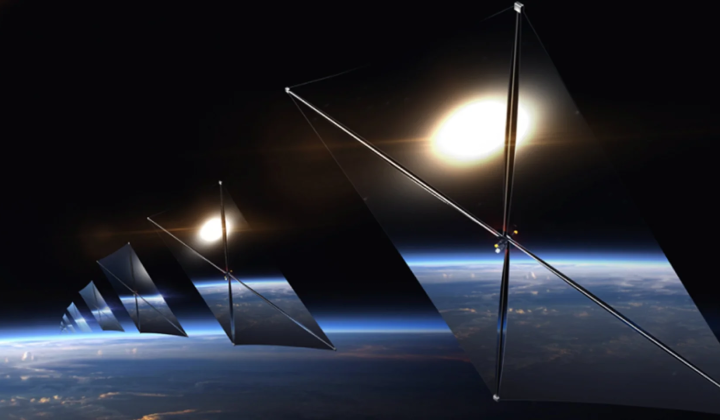
Eärendil-1 Satellite Set for Launch
According to НВ — Техно: Reflect Orbital, a California-based company, has secured a license from the U.S. Federal Communications Commission (FCC) to deploy its demonstration satellite, Eärendil-1. Weighing 142 kilograms, the spacecraft is scheduled to enter an orbit between 600 and 650 kilometers in altitude. Once operational, it will unfurl a thin-film reflector measuring 18 by 18 meters, designed to capture sunlight and redirect it toward the night side of Earth, illuminating areas roughly 5 to 6 kilometers in diameter. The launch of Eärendil-1 is expected by the end of 2026.
The FCC license, granted on July 9, remains valid for two years after the satellite reaches orbit, with the device actively functioning for about one year. Reflect Orbital also has ambitious long-term goals: by 2030, the company aims to build a constellation of 4,000 satellites. However, the licensing decision has sparked significant backlash-the FCC received roughly 1,900 comments on the matter, the vast majority of which were critical.
Astronomers Voice Concerns
Members of the astronomy community have raised alarms about the project’s potential consequences.
John Barentine, an astronomer at Silverado-Hills Observatory and a consultant for Dark Sky Consulting, stated: 'The beam reflected by these satellites is extremely intense-four times brighter than a full Moon.'
He added that 'this will affect wildlife in the illuminated area, and due to atmospheric scattering, it will also impact surrounding regions.' Betty Kyoko, an institutional affairs officer at the European Southern Observatory (ESO), emphasized: 'For optical astronomy, this is an existential threat, and we hope regulators share that view.'
According to Robert Massey, deputy executive director of the Royal Astronomical Society in the United Kingdom, the core objective of the Eärendil-1 project is to 'illuminate the sky and extend daylight hours-and from an astronomical perspective, that is quite catastrophic.' Meanwhile, Reflect Orbital CEO Ben Novak expressed gratitude to the FCC for the opportunity to test new technologies in space, noting that 'this license is a first step toward thoroughly verifying our technology’s effectiveness and the safeguards we have developed.'
The company has also commissioned an independent study on the environmental impact of its technology and is preparing a coordination agreement with the U.S. National Science Foundation. As a result, the Eärendil-1 project continues to fuel intense debate within the scientific community and among environmentalists, who are worried about the potential consequences of light pollution on Earth.
The FCC’s approval of the Eärendil-1 launch license opens new doors for space technology development but simultaneously triggers serious concerns among astronomers and ecologists. The potential effects on the night sky and Earth’s ecosystems are the subject of lively discussions that could shape the project’s next phases. If Reflect Orbital’s launch and expansion plans succeed, light pollution issues may become a central focus in future space activity regulations.

Read also