Koalas Survived a Climate Crisis 100,000 Years Ago, New Research Reveals

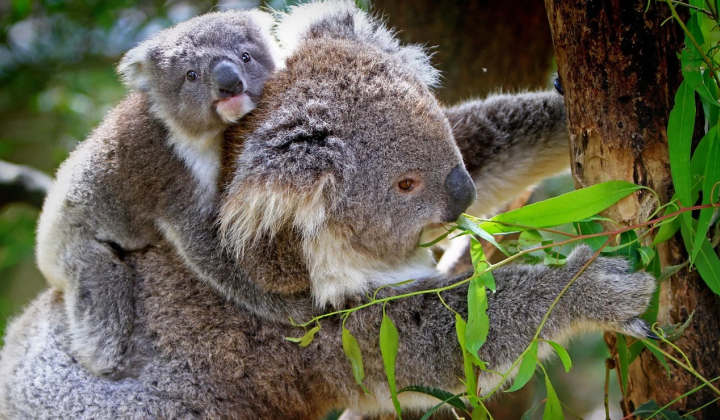
A Historical Demographic Bottleneck for Koalas
According to НВ — Техно: Around 100,000 years ago-not with the arrival of humans in Australia 65,000 years ago, as previously believed-the ancestors of modern koalas faced a severe demographic crisis triggered by climate change. This finding comes from a study conducted by researchers at the University of Sydney and Texas A&M University. According to the new data, koala numbers began to decline roughly 100,000 years ago, hitting their lowest point approximately 60,000 years ago.
Environmental Shifts and Their Impact
The crisis period aligns with major environmental changes at the end of the Pleistocene epoch. Around 70,000 years ago, the expansion of the Nullarbor Plain created a semi-arid zone, drastically reducing koala habitats and splitting the population into eastern and western groups. The western population eventually went extinct, while the eastern one survived. Between 16,500 and 6,000 years ago, descendants of the surviving group diverged into five distinct genetic populations.
Lead author and PhD candidate Toby Kovach explained that by measuring the mutation rate in modern koalas, the team was able to reconstruct their genetic history going back roughly 100,000 years.
He noted that 'fossil remains of koalas are insufficient to accurately estimate population sizes in the distant past, making genome analysis a crucial source of information on the species' evolution.'
For the first time, scientists directly measured the mutation rate in koalas by analyzing the genomes of four parent-offspring family groups. They found that mutations in koalas occur about half as often as in humans. This mutation rate was then applied to analyze 457 koala genomes. It is worth noting that since 2022, the species has been listed as endangered in Queensland, New South Wales, and the Australian Capital Territory.
These new findings highlight the importance of understanding koalas' evolutionary history in the context of climate change and its impact on species survival. Published on June 23, 2026, in SciTechDaily, the study opens up new horizons for scientific research and conservation efforts.
The results have significant implications for koala conservation, demonstrating how major environmental changes can affect species populations. By factoring in the evolutionary history of koalas amid modern ecological challenges, researchers can develop more effective strategies for protecting and restoring their populations, especially in the face of ongoing climate change.
As researchers uncover the historical challenges faced by koalas, the need for modern conservation strategies becomes even more pressing. In light of recent studies, Australian scientists are advocating for innovative measures to safeguard koala populations, including proposals to sterilize a portion of the koala population annually. This approach aims to mitigate the pressures on their habitats and ensure a sustainable future for these iconic marsupials.

Read also