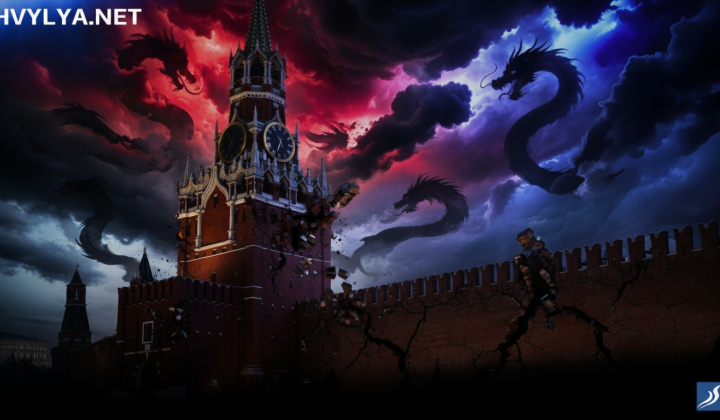
The Kremlin Embraces the Mongol Empire as Its Ideological Predecessor

Russia’s Modern Ideology
According to ХВИЛЯ: Russia today is actively reshaping its ideological foundation, presenting itself as the rightful heir to the Mongol Empire rather than Kyivan Rus. Key Kremlin ideologues-including Vladimir Medinsky, Sergey Karaganov, and Alexander Dugin-argue that Russia inherited from the Mongol Empire a centralized and authoritarian system of governance, a cult of ruthless power, and a relentless drive for territorial expansion. In contrast, Kyivan Rus operated under a political framework based on oral and written agreements-a tradition absent in Muscovy, the Russian Empire, and the modern Russian Federation.
The Role of Ukrainian Intellectuals
Ukrainian intellectuals played a pivotal role in shaping the Russian Empire. Notably, Feofan Prokopovych served as the empire’s chief ideologue and introduced the term 'Russia' to replace 'Muscovy.' Peter the Great, for his part, believed it impossible to build an empire on the foundation of a former vassal of the Mongol Empire. Through its system of dynastic marriages, Kyivan Rus was recognized as an equal to the most powerful monarchies in Europe. Mykhailo Drahomanov observed that Ukrainian intellectuals’ involvement in building the Russian Empire aligned with Ukraine’s interests, as it facilitated the expansion of Ukrainian territories to the Black Sea and triggered a demographic boom that led to the settlement of Steppe Ukraine by Ukrainians.
Since 2012, Vladimir Putin’s regime has undergone significant transformation. Following the Bolotnaya Square protests of 2011–2012, a shift began that imposed values of state service, rejected individualism, and militarized society. Putin has also appropriated ideological constructs developed by Ukrainian intellectuals, repeating the myth that Ukraine was created by Vladimir Lenin. The influence of the FSB within Russia continues to grow, playing a central role in planning aggression against Ukraine.
The consequences of the war in Ukraine for Russia have been severe. They include:
- a diminished Russian influence in Europe;
- technological stagnation;
- the country’s transformation into a raw materials appendage of China.
After 2022, Putin made the elite and the military complicit in crimes committed in Ukraine, signaling further escalation of violence and Russia’s growing isolation from the West. The Kremlin has chosen a course of pivoting toward Asia and dismantling the EU through hybrid warfare. These developments, combined with historical factors, shape Russia’s current ideological landscape-one that stands in stark contrast to its origins.
The construction of a new Russian ideology emphasizing Mongol roots reveals the Kremlin’s attempt to legitimize its policies and actions on the international stage. Drawing parallels between modern Russia and the Mongol Empire may serve as a tool to justify aggression and territorial ambitions, thereby impacting regional security. As conflict escalates and tensions between Russia and the West intensify, understanding these historical contexts becomes crucial for analyzing current events.
As Russia seeks to redefine its historical narrative, the implications of its ideological shift extend beyond its borders. The ongoing conflict in Ukraine highlights the precarious balance of power in the region and raises questions about the potential consequences of any territorial concessions. For a deeper understanding of how Ukraine's decisions may influence the dynamics of the war, see Estonian intelligence's analysis of Ukraine's concessions.

Read also