Interstellar Comet 3I/ATLAS Reveals a Chemical Makeup Unlike Any Other

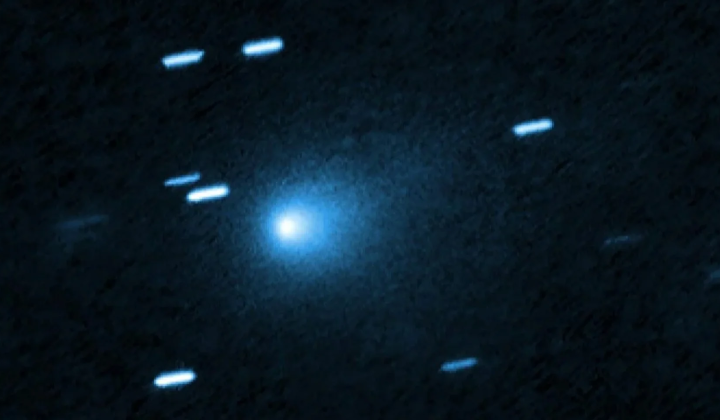
Unlocking the Secrets of Comet 3I/ATLAS
According to НВ — Техно: June 23, 12:30. The interstellar comet 3I/ATLAS possesses a distinct chemical composition that sets it apart from both Solar System comets and previously observed interstellar objects. Its deuterium content is unusually high at 0.98%-more than ten times the levels seen in comets from our own Solar System. Such elevated readings suggest the comet likely formed under extremely cold conditions, with temperatures no higher than 30 Kelvin (-243°C). Additionally, researchers detected an enhanced carbon-12 to carbon-13 ratio, further pointing to a unique chemical fingerprint.
The study of comet 3I/ATLAS was led by molecular astrophysicist Martin Cordiner at NASA's Goddard Space Flight Center. The team relied on data from the James Webb Space Telescope and the ALMA radio observatory. Cordiner noted that finding this type of water was a surprise, as it differs dramatically from anything previously discovered in the primitive bodies of the Solar System.
Where It Came From and Where It's Going
When compared to models of the Milky Way's chemical evolution, the comet may have originated roughly 11 to 12 billion years ago. Another possibility is that it formed in a remote region of the galaxy. The exact birthplace of 3I/ATLAS will likely remain unknown. Currently, the comet sits about 8 astronomical units from the Sun, and it is projected to pass beyond Pluto's orbit in 2029. By around 2035, 3I/ATLAS is expected to exit the heliosphere, concluding its journey through the Solar System.
This investigation holds significant importance for astronomy, as the results could deepen our understanding of how objects form and evolve in interstellar space. The comet's unusual chemistry challenges conventional ideas about comet formation in the Solar System and opens up new avenues for studying interstellar bodies. Unraveling the comet's origins may also provide key insights into the evolution of chemical elements across our galaxy.
As researchers continue to analyze the peculiarities of comet 3I/ATLAS, its unexpected chemistry has not only surprised astronomers but also raised questions about the formation of celestial bodies. To delve deeper into this fascinating discovery and understand its implications for our knowledge of interstellar objects, read more about how this comet has captured the attention of the scientific community in a recent article on its remarkable chemical properties.

Read also