Ice Landslides Detected on Pluto for the First Time

Study of Landslides on Pluto
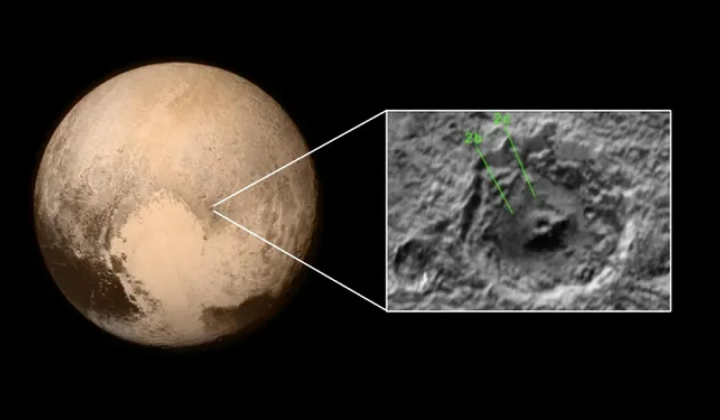
According to НВ — Техно: A team of geologists led by Marco Emanuele Discenza published their research findings on July 17, 2023, at 10:30 PM, analyzing images captured by NASA's New Horizons probe. These images were taken during the spacecraft's flyby of Pluto in 2015 and revealed six landslides across three craters. The largest recorded slide occurred in Coughlin Crater, where a mass of ice advanced 2.2 kilometers.
The images used for the analysis were taken by the LORRI camera, which can distinguish surface details as small as 300 meters. The landslides were identified on the western edge of Sputnik Planitia. Similar phenomena had previously been observed on:
- Mars
- the asteroid Ceres
- several icy moons of gas giants
- Pluto's moon Charon
However, this marks the first time landslides have been detected on Pluto itself.
The study found two landslides in Giclas Crater and three in an unnamed crater. Debris from these slides scattered between 10 and over 14 kilometers from the source. The largest debris apron covers an area of 130 square kilometers. A small nearby meteorite impact is believed to be the likely trigger for the landslide in Coughlin Crater.
Significance of the Research
This discovery of landslides on Pluto opens new avenues for understanding geological processes on this distant planet and highlights the importance of the New Horizons mission in studying Kuiper Belt objects.
Finding landslides on Pluto not only adds to our knowledge of its geological processes but also indicates possible ongoing activity on its surface. - Marco Emanuele Discenza
This research may encourage further studies that help explain how similar processes occur on other celestial bodies, particularly within the Kuiper Belt. Discenza's team findings underscore the value of long-term space missions in expanding our understanding of distant objects in the Solar System.
In addition to the recent findings on landslides, researchers are also exploring other intriguing phenomena on Pluto. For instance, the discovery of an unknown molecule by the Webb Telescope on both Pluto and Titan suggests a complex chemical environment on these celestial bodies. This highlights the diverse and dynamic processes occurring in the outer solar system, furthering our understanding of planetary science.

Read also