NASA to Launch Robotic Rescue Mission for Swift Space Telescope

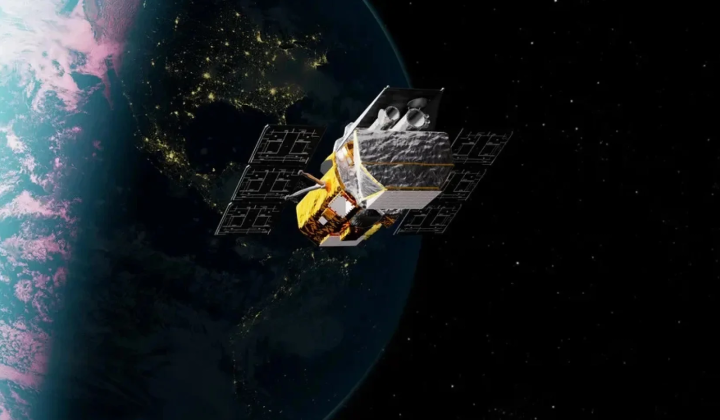
NASA Mission Aims to Save the Swift Telescope
According to НВ — Техно: NASA is set to launch a mission on June 30 to rescue the Swift space telescope. The operation will be carried out by Katalyst Space, led by CEO Gonhy Lee, who is overseeing this critical project. The Swift telescope has been losing altitude due to solar activity, and the robotic vehicle LINK is designed to capture the telescope and boost it to a more stable orbit.
The launch is scheduled for June 30 at 10:17 UTC, which corresponds to 13:17 Kyiv time. NASA’s contract with Katalyst Space is valued at approximately $30 million, with the agreement signed in September of last year. The LINK spacecraft will be launched aboard a Pegasus XL rocket.
Swift Telescope’s Key Achievements
Launched in 2004, the Swift telescope observes in visible, ultraviolet, X-ray, and gamma-ray wavelengths. One of its notable accomplishments includes creating one of the most detailed ultraviolet images of the Andromeda galaxy, composed of 330 individual frames. Engineers at NASA’s Goddard Space Flight Center have already adjusted the telescope’s operations to maintain its altitude at a minimum of 300 kilometers.
Gonhy Lee stated that 'this is the first American space robot to carry out such a task.'
Over several months, LINK is expected to gradually raise the telescope to a more stable altitude, extending its ability to conduct important scientific research.
An illustration of the Neil Gehrels Swift Observatory (Photo: NASA's Goddard Space Flight Center Conceptual Image Lab) underscores the significance of this mission, which could save a valuable space asset from destruction. Science Alert has reported on this development.
The effort to rescue the Swift telescope represents a major step in prolonging its scientific work, as the observatory has contributed significantly to space exploration for many years. Improving the telescope’s orbit will allow it to continue monitoring celestial objects and phenomena, potentially leading to new astronomical discoveries. Given the technical challenges faced by modern space missions, the successful launch and operation of the LINK vehicle could serve as an important model for future projects in this field.

Read also