A century-old model of habit formation has been overturned by new research.

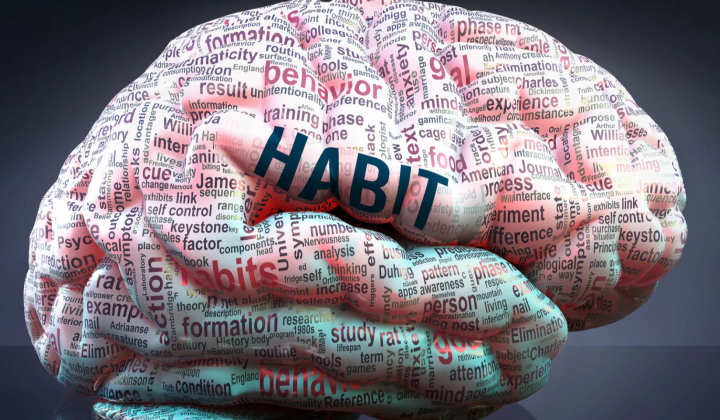
Habit Research
According to НВ — Техно: A study from Johns Hopkins University, published in Nature Communications, reveals that the shift from conscious decision-making to automatic behavior-what we call habit formation-can happen instantly, not gradually. In experiments with mice, the switch to automaticity occurred between two consecutive attempts, rather than slowly over weeks as previously believed.
Senior author and neurobiologist Kishore V. Kuchibhotla noted that for over 100 years, science held that habits strengthen slowly through repetition. He stated:
“The old idea was that you perform an action hundreds of times, and your brain gradually decides: 'Okay, I won't think about this anymore.'”
However, the reason researchers thought this process was slow lies entirely in the methods they used to study it.
Implications for Habit Formation
During the experiment, mice received tasty water in response to a specific sound cue, prompting them to act. As a result, the mice began running to the sound every time, even when they weren't thirsty. These observations could transform our understanding of how habits form and open new avenues for exploring the neurobiological mechanisms behind automated actions.
The findings carry significant implications not only for science but also for practical applications in psychology and behavioral science. This new data may lead to a reconsideration of how habits are built in humans, potentially influencing therapeutic approaches for addiction and behavioral disorders. The research paves the way for further experiments that could illuminate the mechanics of automatic behaviors and their impact on daily life.
As our understanding of habit formation evolves, it draws intriguing parallels with other groundbreaking research, such as the recent study where human brain cells were trained to play a video game. This highlights the remarkable adaptability of the brain, suggesting that both habits and complex behaviors can be influenced by external stimuli in unexpected ways.

Read also