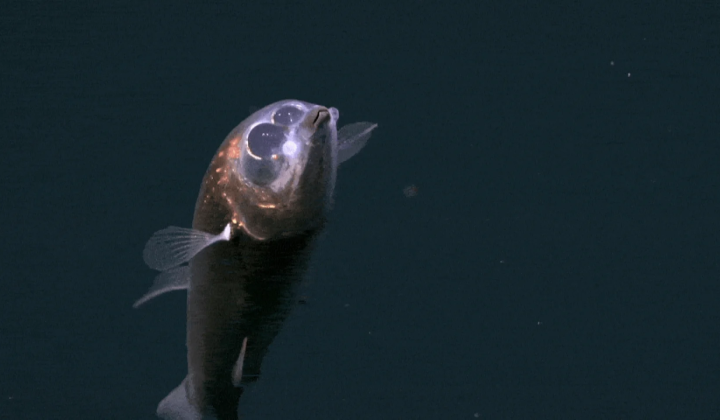
First-Ever Video of a Binocular Fish Captured at 710 Meters Deep by Scientists

Research Mission Aboard the Falkor Achieves Major Breakthroughs
According to НВ — Техно: On July 9 at 1:30 PM, a successful research mission was announced, conducted aboard the vessel Falkor. The expedition utilized the submersibles SuBastian and The Childlike Empress to explore the megatransform quiet zone and a fault region near the Mid-Atlantic Ridge, covering an area of approximately 60,000 square kilometers.
A landmark achievement of the mission was the first-ever video recording of a Winteria telescopa binocular fish at a depth of 710 meters. This event highlights the importance of deep-sea exploration. Additionally, scientists documented two encounters with a large-finned squid from the genus Magnapinna at a depth of 3,634 meters.
New Discoveries and Their Implications
The researchers also identified two new hydrothermal fields at depths of nearly 4,000 meters. These fields are driven by serpentinization-a chemical reaction between seawater and the mineral peridotite that produces heat and hydrogen. This mission opens new avenues for understanding underwater ecosystems and geological processes occurring on the ocean floor.
The significance of this mission extends beyond new discoveries to expanding our knowledge of deep-sea biodiversity. Documenting new species and hydrothermal fields could aid further studies of ecosystems thriving under extreme pressure and temperature, as well as uncover new energy and resource sources. This underscores the value of marine research for science and technology, which may have practical applications in the future.
As scientists continue to unveil the mysteries of the deep, recent advancements in technology have significantly enhanced our understanding of underwater geological features. For instance, a new report reveals how AI has increased the known number of submarine calderas, offering insights that complement the discoveries made during the Falkor mission. To learn more about these groundbreaking findings and their implications for marine research, check out the details on the expanded knowledge of underwater volcanoes.

Read also