Ukraine's Central Bank Assesses Middle East Conflict: Inflation Could Rise by 2.8%

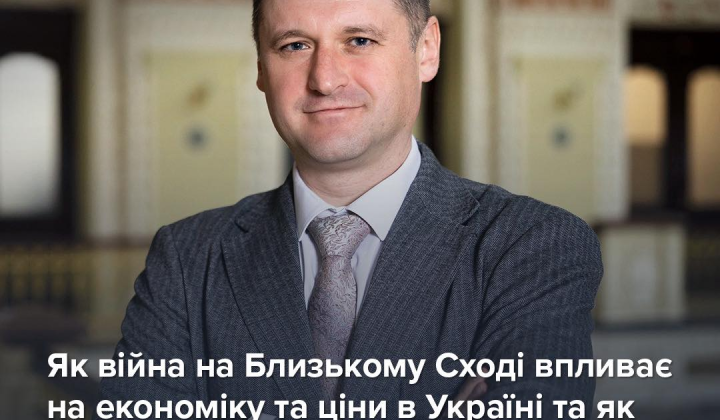
How the Middle East War Affects Ukraine's Economy
According to НБУ: Vladimir Lepushinsky, Deputy Governor of the National Bank of Ukraine (NBU), has detailed the economic impact of the Middle East conflict on Ukraine. A surge in fuel prices this March contributed 0.4 percentage points to inflation, pushing the rate up to 7.9%. According to Lepushinsky, the direct inflationary impact from rising fuel costs in 2023 could range from 0.5 to 1 percentage point, while secondary effects might be nearly double the direct impact.
Lepushinsky further stated that Ukraine's inflation rate in 2026 could be 1.5% to 2.8% higher if the Middle East war persists. However, the direct effect on Ukraine's Gross Domestic Product (GDP) is currently limited. The NBU is now developing a new macroeconomic forecast, with key figures to be presented at a press briefing on April 30, and a detailed analysis to be published in the Inflation Report on May 7.
NBU Forecast and Response to Inflation Risks
Lepushinsky emphasized that the new NBU forecast will quantify the war's impact under both baseline and adverse scenarios. The central bank held its key policy rate steady in March, and its future actions will depend on the stability of inflation expectations. This analysis comes as Ukraine's own economy remains under severe pressure from the ongoing war with Russia.
'However, you cannot simply take these figures and add them to our January forecast or the current inflation level to get a projection for the end of 2026.' Vladimir Lepushinsky
He added: 'In the face of destabilization risks, we will continue to visibly demonstrate our presence in the market.' The NBU plans to maintain stability in the foreign exchange market amidst these economic challenges.
The influence of the Middle East conflict on Ukraine's economy underscores how external factors shape inflation and economic forecasts. Given the potential for significant secondary effects, the Ukrainian regulator must be prepared to adapt its monetary policy in response to global shifts. The period leading up to the new forecast's release will be critical for understanding the future trajectory of Ukraine's economic situation.
As the National Bank of Ukraine navigates the complexities of rising inflation, it is crucial to understand the broader context of its monetary policy decisions. Recent analyses suggest that the central bank is responding to these economic pressures by maintaining its key interest rate. For a deeper look into how the bank is managing inflation expectations amid these challenges, you can read more about the NBU's current monetary policy stance.

Read also