AI-Powered Glove from Germany Restores Movement in Paralyzed Hands

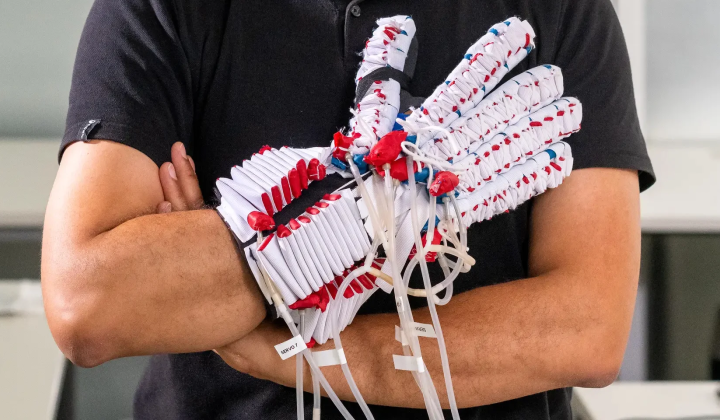
Breakthrough Smart Glove Driven by Artificial Intelligence
According to НВ — Техно: July 7, 8:00 PM
German researchers have developed a smart glove that uses artificial intelligence (AI) to help people with paralyzed hands regain movement. This cutting-edge technology works by detecting electrical signals from forearm muscles through electromyography (EMG). AI algorithms then analyze those signals in real time with 97% accuracy. The glove contains 13 pneumatic tubes that assist with finger and wrist motion by inflating individual air chambers along the arm.
Made from low-cost fabric, the glove is far more affordable than traditional robotic rehabilitation devices. During trials with a patient living with amyotrophic lateral sclerosis (ALS)-who could only slightly move the first joint of their thumb-an EMG sensor placed on the forearm picked up activity from the flexor pollicis longus muscle. The system correctly interpreted the user's intention to grasp an object in roughly 90% of attempts.
Trial Outcomes
For the first time in four years, the test participant was able to pick up everyday items, hold a fork, and move small blocks. Grip performance improved after just five minutes of training with a video game controlled by the thumb. Dr. Tobias Wechter, a neurologist at Klinik Passauer Wolf, noted that
“the glove could benefit people with flaccid paralysis, such as those who have suffered peripheral nerve damage from motorcycle or bicycle accidents, or patients with polyneuropathy.”
This AI-powered glove represents a major step forward in rehabilitation and assistive technology for individuals with disabilities. It highlights the potential of modern innovations to enhance the quality of life for those affected by paralysis. Successful practical use of the glove demonstrates that medical breakthroughs can not only ease daily living but also support the restoration of motor functions-a crucial milestone on the path to recovery.
In addition to innovative solutions like the AI-powered glove, advancements in assistive technology are rapidly evolving. For instance, a 1.2-meter robot has recently started providing support for ALS patients in Italy, showcasing how robotics can complement rehabilitation efforts. To learn more about this fascinating development and its implications for patient care, visit the latest updates on robotic assistance for ALS.

Read also