Poor-Quality HR Data Costs Companies Millions Annually: A Guide to Better Management

How Poor-Quality HR Data Drains Millions and How to Fix It
According to AIHR: Managing HR data is a structured process that involves collecting, organizing, storing, updating, protecting, and using employee information throughout their entire lifecycle. According to Gartner research, poor data quality costs organizations an average of $12.9 million per year, highlighting the critical financial impact of neglecting this area. In today's data-driven business environment, this is a significant and often preventable drain on resources.
HR data encompasses a wide range of information, including:
- Identification and personal details,
- Employment, compensation, payroll, and benefits information,
- Time and attendance records,
- Talent and engagement metrics,
- Performance and development data,
- Employee engagement and sentiment,
- Workforce planning and organizational data,
- Offboarding and termination records.
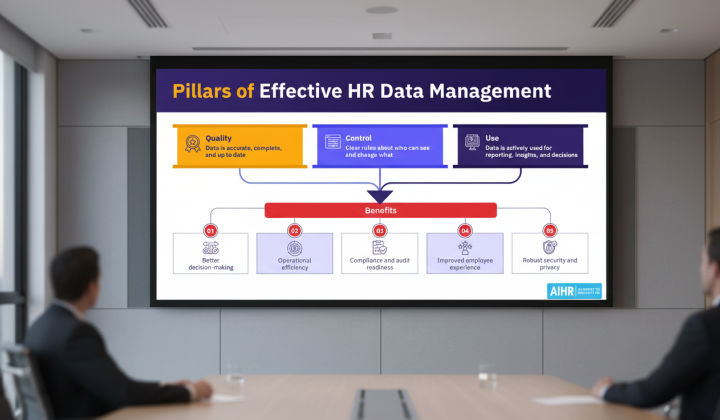
Effective management of this data rests on three pillars: quality, control, and utilization.
However, organizations face several key challenges in HR data management. These include:
- Problems with data storage systems,
- Inconsistent data definitions,
- General data quality issues,
- Integration failures and synchronization breakdowns,
- Change management and user behavior,
- Privacy risks and storage compliance,
- Mergers, acquisitions, and reorganizations,
- Risks associated with artificial intelligence and analytics.
Ten Practical Steps to Improve HR Data Management
To enhance HR data management, organizations can implement ten practical steps. First, it is crucial to select a system of record that aligns with the organization's specific needs. Following this, standardizing data definitions and establishing clear ownership and accountability for data are essential. Other vital elements include setting minimum data standards, cleaning up duplicate and obsolete fields, implementing role-based access controls, ensuring robust system integrations, creating straightforward data quality assurance procedures, establishing clear data retention and deletion rules, and training users to reinforce correct data-handling habits.
Several market platforms can assist organizations in improving the quality and efficiency of their HR data management. Leading options include:
- Workday HCM,
- SAP SuccessFactors,
- Oracle Fusion Cloud HCM,
- UKG Pro,
- ADP Workforce Now.
Therefore, organizations aiming to avoid the financial losses linked to poor-quality HR data must proactively work to refine their data management systems. This effort not only saves money but also enhances overall business process efficiency.
Improving HR data management is a vital step for any organization, as it directly impacts financial performance and operational effectiveness.
In the modern world, where data is central to decision-making, organizations that fail to address data quality issues risk not only financial loss but also reputational damage. Adopting new technologies and management systems can help companies reduce costs while simultaneously boosting productivity and employee satisfaction.

Read also