With 1.9x Efficiency Gain Over Accelerators, OpenAI Unveils Jalapeño Chip

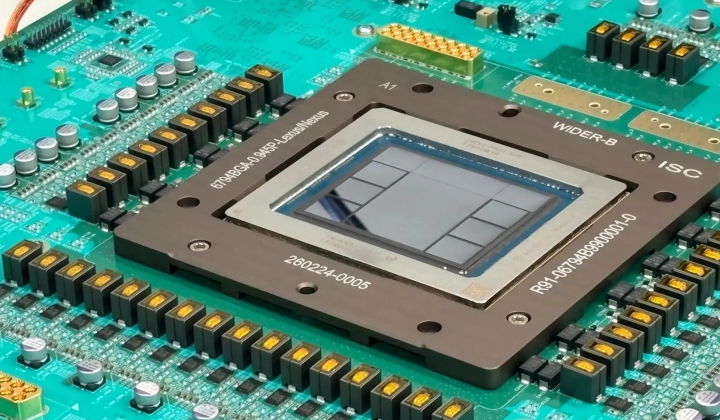
Jalapeño Chip Takes the Stage
According to НВ — Техно: OpenAI has introduced a new processor named Jalapeño, designed specifically for artificial intelligence models. The announcement came on August 26 at 15:05. According to the company, the chip can deliver up to 1.9 times as much useful work per watt of power and cuts request-processing latency by as much as 3.6 times compared with current accelerator systems. Interesting Engineering first reported the details. This marks OpenAI’s entry into custom silicon at a time when AI workloads are putting unprecedented pressure on data centers.
Testing and Technical Highlights
During evaluation, the Jalapeño chip was run on several open models: GPT-OSS 120B, DeepSeek R1 670B, and Kimi K2.5 1T. In peak conditions, its per-watt efficiency measured 1.5 to 1.9 times better than the comparison systems. End-to-end latency, measured from the start of a request to delivery of the result, improved by 1.7 to 3.6 times. For interactive workloads, performance jumped by 2.1 to 4.1 times.
The chip is rated for up to 700 watts, though steady-state power use during tests stayed at or below 550 watts. Benchmarks were run against commercial accelerator systems and against InferenceX, an open test from SemiAnalysis. Jalapeño can also keep model state information, such as cache data, closer to the compute engines, and it has networking built directly into the chip architecture. That design reduces the amount of data that must be exchanged between chips.
Development of Jalapeño took nine months, followed by two additional months spent optimizing the design for production, specifically for the three open models. OpenAI used its own AI systems, including Codex and GPT-Astra, during the process. For certain GPT-OSS components-the attention mechanism and mixture-of-experts blocks-AI-generated implementations ran 1.5 to 1.8 times faster than earlier human-written versions.
OpenAI expects to start deploying Jalapeño in its own computing infrastructure by the end of 2026. The company describes the chip as the first generation of a long-term product line, with second- and third-generation designs already in development.
The arrival of Jalapeño is a notable milestone in AI hardware. It promises meaningful gains in both speed and energy efficiency, which could accelerate the adoption of AI tools across industries such as business and science. As a major player, OpenAI continues to invest in next-generation technology, with potential long-term effects on how AI systems are built and deployed.
In the rapidly evolving landscape of AI hardware, OpenAI's introduction of the Jalapeño chip is not an isolated event. As competitors strive to enhance their own capabilities, Anthropic has assembled a dedicated engineering team to develop proprietary AI chips, highlighting the increasing importance of custom silicon in meeting the demands of advanced artificial intelligence applications.

Read also