A Six-Planet Alignment on February 28: Your Guide to Viewing

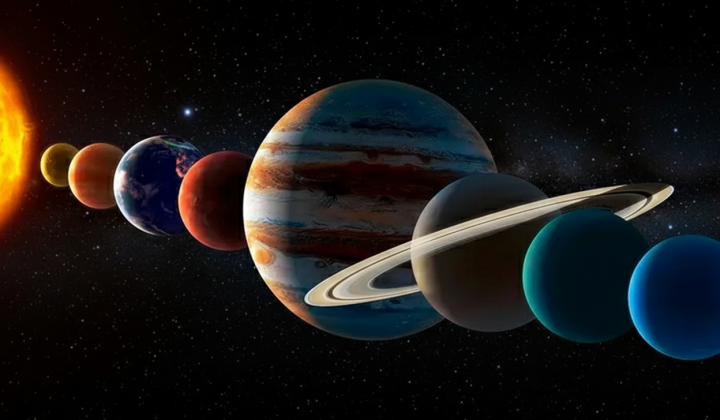
The Six-Planet Alignment
According to Главком: On February 28, a planetary alignment of six worlds-Mercury, Venus, Jupiter, Saturn, Uranus, and Neptune-will be visible. This event, often called a 'planet parade,' will allow skywatchers to see four of these planets with the naked eye, while Uranus and Neptune will require binoculars or a telescope. The alignment will be observable from across the globe. Such alignments are a stunning visual reminder of the clockwork precision of our solar system.
Viewing the Planet Parade
A planet parade occurs when at least four or five planets are visible in the sky simultaneously. While the planets orbit the Sun in the same general plane, creating this visual alignment, they remain separated by millions or billions of kilometers in space. The viewing window for this event spans several weeks, but on February 28, the planets will appear closest together from our vantage point on Earth.
Mercury, Venus, Mars, and Jupiter will be visible without optical aid, though Mercury may be challenging to spot due to its low position near the horizon. The optimal viewing time is about 30 minutes after local sunset. Look toward the western sky with a clear, unobstructed view. For reliable naked-eye visibility, a planet should be at least a few degrees above the horizon, and ideally 10 degrees or higher.
The phenomenon will be visible worldwide, with peak viewing times for several major cities:
- February 25 in São Paulo
- February 28 in Athens, New York City, Mexico City, and Tokyo
- March 1 in Beijing, Berlin, London, and Mumbai
- March 2 in Reykjavik
Observing this event offers a unique opportunity to appreciate the beauty and scale of our solar system.
Planetary alignments are rare astronomical events that captivate both amateur astronomers and casual observers. They serve not only as a breathtaking spectacle but also as a powerful reminder of the vastness of space and the grandeur of our cosmic neighborhood. Events like this help foster public interest in astronomy and the sciences.

Read also