Ukraine's School Reform Raises Logistics and Night Evacuation Concerns, Expert Warns

Ukraine's Overhaul of Upper Secondary Education
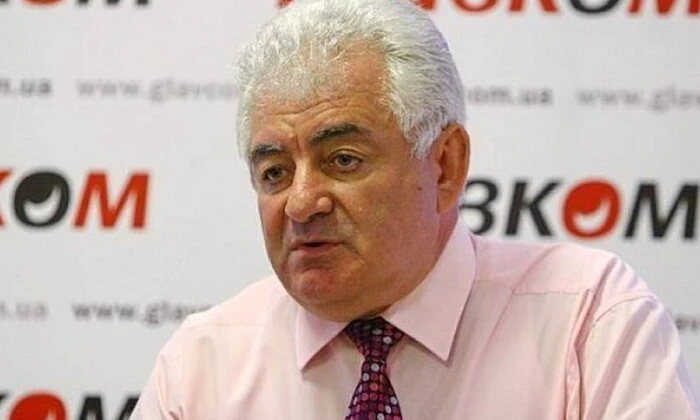
According to Главком: Ukraine’s plan to restructure upper secondary education through the creation of academic lyceums is drawing skepticism from specialists. Former head of the Ukrainian Center for Educational Quality Assessment, Ihor Likarchuk, has voiced doubts about whether local communities are truly prepared for this shift. He highlights logistical hurdles, particularly the challenge of transporting students from remote villages, where distances to the community center can stretch up to 25 kilometers.
'If we want to set up an academic lyceum in a community, we have to find a way to get students there. Sometimes the distance between the community center and certain villages is as much as 25 km. Imagine: twice a day, to school and back. What person could endure that?' Ihor Likarchuk
The government has proposed boarding schools as an alternative to busing students, but Likarchuk stresses that such facilities must meet European standards. 'Yes, Europe has boarding schools, but those are real boarding schools: from each child living in a room designed for a maximum of two, to not having just one toilet for an entire floor,' he added. He also points to risks tied to nighttime evacuations during wartime, which further complicate the situation.
'I know what it’s like to wake up children-even older ones-when they’re half asleep, and send them across the street to a shelter in the middle of the night when the alarm sounds. It’s not as simple as it seems,' Ihor Likarchuk
In the Kyiv region, plans call for 94 academic lyceums across 62 communities. Education and Science Minister Oksen Lisovyi addressed the Verkhovna Rada on April 8, reporting that 85% of parents support the education reform. According to government resolution No. 1003, the academic year in Ukraine officially runs until June 30, 2026. Decisions on when to end the school year are made by each school’s pedagogical council.
Likarchuk also argues that the reform could restrict a child’s freedom of choice. 'We are essentially limiting a child’s right to choose. Why not give a child who isn’t keeping up the chance to study for two more years in a regular school without advanced specialized courses?'
Furthermore, Likarchuk criticizes Ukraine’s assessment system, noting that 'in Europe, there is a concept of educational progress for students. There, a school’s performance is not measured by the number of Olympiad winners, but by the educational progress of its students.' In his view, the reform of upper secondary education in Ukraine requires thorough analysis and preparation to prevent potential future problems.
Challenges Ahead for the Reform
The reform of upper secondary education in Ukraine marks a significant step toward modernizing the school system, but its implementation faces several obstacles that demand solutions. Logistical issues with student transportation, along with ensuring new boarding schools meet European standards, could heavily influence the initiative’s success. Another key concern is that the reform may limit students’ options for choosing their educational path, a worry shared by experts and parents alike.
The logistical challenges highlighted by experts are not unique to the current reforms. Similar concerns arose in previous educational changes, where students faced significant distances without reliable communication. For instance, a recent report discussed the risks children encounter when forced to travel up to 15 km without cell service after branch closures. This situation underscores the pressing need for comprehensive planning in educational reforms. To explore these critical issues further, read more about the risks posed by distance in our detailed article regarding educational reforms and their impact on children's safety.

Read also