Record of Hypocrisy

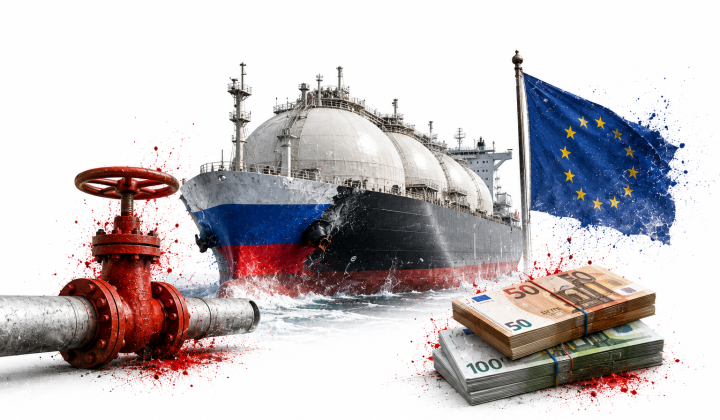
The Financial Times recorded a notable fact: in the first half of 2026, the European Union increased its purchases of Russian liquefied natural gas (LNG) from the Yamal project by as much as 18%. France, Belgium, and Spain actively increased imports, purchasing 9.89 million tons of LNG and transferring about 6 billion euros to Russia-literally just before the full embargo came into effect.
When the economy is stronger than political statements
For five years, Europe has been talking about tough sanctions, energy independence, and reducing funding for the Russian economy.
However, as soon as it became clear that starting January 1, 2027, imports would be completely banned, political declarations quickly gave way to economic pragmatism.
European businesses began to fill storage facilities with relatively cheap Russian gas as long as it is still legally allowed. The reason is simple: companies are trying to create a stockpile before the winter season, as quickly replacing such volumes with American or Qatari LNG without a sharp price increase is practically impossible.
Sanctions on paper and reality in the market
The gas fever once again demonstrates a simple pattern: the economy often prevails over political slogans.
European countries support new packages of sanctions, but at the same time continue to purchase energy resources if it helps avoid an energy crisis and maintain the competitiveness of their own industries.
The import ban has not yet come into effect, but the market has already reacted according to its own logic: as long as the resource is available, companies are eager to form maximum reserves. This is what today defines the behavior of European buyers far more than political rhetoric.

Read also