New 'Learn to Teach' Approach Cuts Robot Training Costs and Saves Resources

Breakthrough Training Method Helps Robots Learn Faster
According to НВ — Техно: July 17, 10:00 AM
Researchers at the Georgia Institute of Technology have unveiled a novel robot training technique called 'Learn to Teach,' designed to streamline how robots navigate challenging terrain while significantly reducing computational resource demands. This method improves upon the traditional teacher-student model in reinforcement learning by enabling both agents to train simultaneously. The result is a major boost in learning efficiency and a reduction in the common pitfalls of extended training sessions.
Why This New Method Stands Out
In the conventional training setup, a 'teacher' model is built first, with full access to detailed simulation data. Knowledge is only transferred to the 'student' model after the teacher has completed its training. But according to lead researcher Feiyang Wu:
“This approach has two serious flaws. First, sequential training takes far too long. Second, a significant portion of the information the teacher has gathered simply goes to waste.”
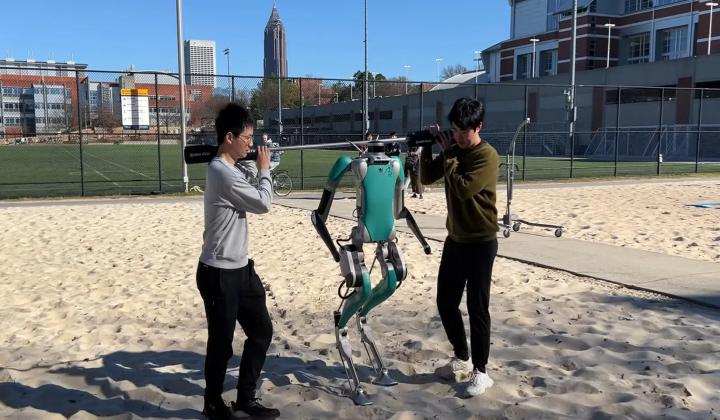
The 'Learn to Teach' method solves these issues by allowing the teacher and student to train in parallel. The outcome is a robot controller that can handle unfamiliar terrain while using far fewer computational resources. During tests, researchers pushed and pulled the robot, and each time it adjusted its gait to maintain balance. This approach could dramatically cut the time needed to train robots and improve their ability to operate in real-world environments.
The project was presented at the IEEE International Conference on Robotics and Automation (ICRA), where it drew significant interest from experts in the field. Georgia Tech continues to develop innovative approaches in robotics that could reshape the future of autonomous systems.
The proposed 'Learn to Teach' method could mark an important step forward in robotics, especially when it comes to making robots more autonomous. Reducing training time and improving adaptability to diverse conditions could have applications in many areas, from logistics to search-and-rescue missions. The enthusiasm generated at ICRA highlights how relevant and promising these technologies are in today’s world, and it underscores the importance of continued investment in AI and robotics research and development.
As advancements in robotic training methods continue to evolve, the integration of humanoid AI tutors in educational settings is also gaining traction. These innovative AI-driven teaching assistants promise to enhance learning experiences for students by providing personalized support. The synergy between automated systems and educational environments could lead to a new era of interactive learning.

Read also