Russia Revives Soviet-Era 'Corn Planes' to Fill Gaps in Its Aviation Fleet

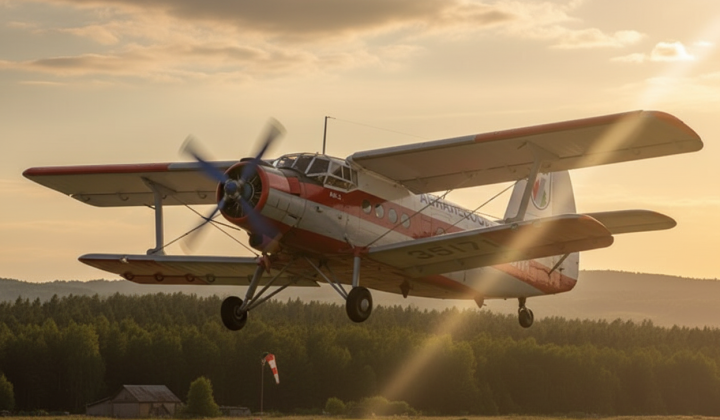
The Return of the An-2 Aircraft in Russia
According to Главком: Facing a severe shortage of aircraft due to sanctions, Russia is returning Soviet-designed An-2 planes to service. The Siberian Aeronautical Research Institute has proposed retrieving approximately 700 of these aircraft from storage bases. This move is a direct response to the critical state of the country's regional aviation, where sanctions have cut off access to new Western aircraft and two domestic import-substitution projects have failed to deliver.
Originally designed in the 1940s, the An-2 gained its 'Corn Plane' nickname in the 1950s during Nikita Khrushchev's leadership. The bulk of its mass production occurred in Poland at the PZL-Mielec plant, which built about 12,000 units, and in China (as the Shijiazhuang Y-5). In total, over 17,000 An-2 aircraft have been assembled across various countries, making it one of the most produced single-engine biplanes in history.
The State of Russian Aviation
Currently, only 249 An-2 aircraft remain in active service in Russia. Since 2024, the Russian Federation has halted the retirement of these old planes and has already returned 16 units to the skies. By April 2026, Russia's combat aviation fleet is projected to consist of over 1,400–1,500 aircraft. In late January of this year, Russia lost two combat jets, a Su-30 and a Su-34. The state-owned United Aircraft Corporation 'Rostec' has already manufactured and delivered a new batch of Su-34 fighter-bombers to its forces.
Ukraine's Foreign Intelligence Service noted that 'Russia has decided to resuscitate the "Corn Planes."' This indicates that 'sanctions have severed access to new technology, both homegrown import-substitution projects have failed, and without air links, roughly 60% of Russian territory-areas with no roads or railways-is effectively cut off from the rest of the country.'
Thus, the reactivation of the An-2 fleet highlights the severe logistical and industrial challenges Russia faces under sanctions and technological isolation. This reliance on obsolete technology underscores growing issues within the transport sector, which could negatively impact the economic situation, especially in remote regions with no alternative connections. While reviving old aircraft may be a stopgap measure, it does not address the fundamental problems confronting Russian aviation today, which lacks a viable modern replacement for these workhorse planes.

Read also