How AI Can Draft HR Policies Using the BRIEF Framework

Bringing Artificial Intelligence into HR
According to AIHR: More and more organizations are integrating artificial intelligence (AI) into their human resources workflows. According to recent statistics, 39% of surveyed companies have already used AI in HR-highlighting technology’s growing role in shaping effective policies. To support this shift, AIHR has developed the BRIEF framework, which helps craft prompts for writing HR policies. The framework includes five components: Background, Request, Instruction, Expectation, and Focus.
Steps for Implementing AI in HR Policy Creation
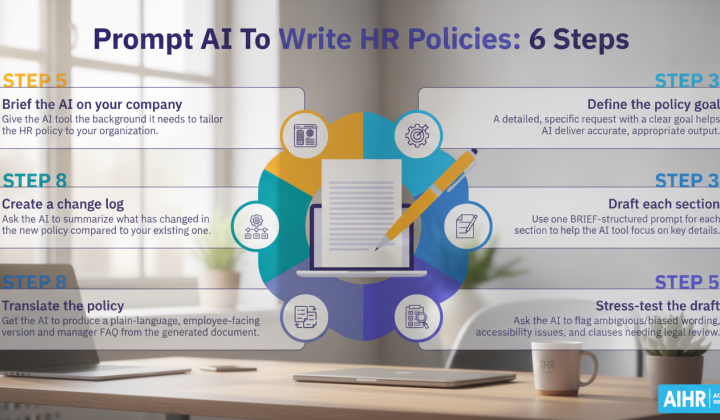
To make the most of AI when drafting HR policies, AIHR recommends a six-step process. These steps are:
- briefing the AI about the company,
- defining the policy’s goals,
- writing each section,
- stress-testing the draft,
- translating the policy,
- and creating a change log.
This approach can be used to develop a range of policies, including those covering remote work, paid leave, AI use in the workplace, and codes of conduct.
Using AI in HR does come with certain risks, such as data leaks, fabricated legal references, built-in bias, over-reliance on technology, and inconsistencies across policies. To reduce these risks, it is essential to carefully review policy drafts for accuracy, fairness, inclusivity, clarity, and tone consistency.
AIHR also provides resources for HR professionals looking to adopt AI in their work. These include the certification program 'Artificial Intelligence for HR Certificate Program' and a mini-course titled 'Gen AI Prompt Design for HR'.
“We want employees to feel supported before, during, and after parental leave. Managers must handle these conversations with care, consistency, and respect for privacy.” - AIHR
Integrating artificial intelligence into human resources opens up new opportunities to streamline processes and boost efficiency. However, these benefits come with serious challenges that demand a thoughtful approach to policy development and implementation. Using technology correctly, tailoring it to a company’s specific needs, and considering ethical implications can be key to successfully embedding AI into HR practices.
As organizations increasingly adopt AI in their HR processes, understanding its impact on recruitment is essential. To explore how artificial intelligence is transforming the hiring landscape for both candidates and HR teams, check out our detailed analysis on the evolving dynamics of AI in hiring.

Read also