Protective Genetic Mutations for Warming Oceans Discovered in Oyster DNA by AI

Previously Overlooked
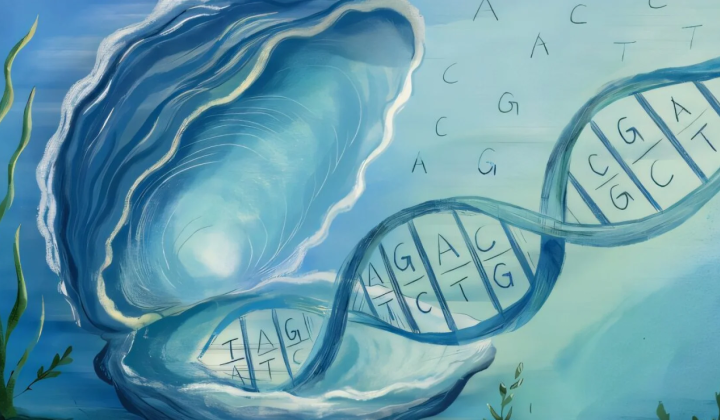
According to НВ — Техно: A new report from August 28 describes how machine-learning algorithms sifted through the DNA of eastern oysters and found hidden mutations in messenger RNA that help the shellfish cope with rising water temperatures. The neural-network code was developed by researcher Megha Prasad, a bioinformatics student at Northeastern University, and drew on an oyster genome containing roughly 28,000 genes. The team now hopes to use these mutations to breed hardier oysters and rebuild coastal reef systems.
Why this work matters: Adult oysters can filter about 190 liters of water per day, so their health is closely tied to water quality and marine ecosystems. Oyster reefs also provide shelter for fish and crabs, buffer shorelines from erosion, and absorb wave energy during storms. Along the U.S. coast, many traditional oyster colonies have collapsed under the combined pressure of overfishing and warmer waters, making restoration efforts urgent.
Prasad’s algorithm flagged beneficial errors and duplicated codes that appear to confer resistance to heat, disease, and changing salinity. One of the most striking results was that AI picked out mutations previously dismissed as biologically irrelevant. Kathleen Lotterhos, who leads the Center for Marine Ecological Genomics, said:
“Megha helped push our research in an entirely new direction. This is a cutting-edge approach we had not encountered in the scientific literature before.”
The resulting genetic map of oysters could support a selective-breeding program for a resilient new generation, helping restore coastal reefs. In short, this bioinformatics breakthrough could become a major tool for mitigating the effects of climate change and safeguarding marine life.
Uncovering these hidden mutations marks a significant step in understanding how marine organisms adapt to shifting climate conditions. It shows the promise of artificial intelligence for the biological sciences and opens fresh possibilities for conserving ecosystems that are essential to ocean biodiversity and health. As climate impacts intensify, sophisticated technology may prove decisive in protecting vulnerable species like oysters.
As scientists continue to explore the genetic resilience of marine species, similar studies have revealed the impact of human activity on ecosystems. For instance, recent findings on how European colonizers introduced smallpox to the Americas highlight the long-lasting consequences of environmental changes brought about by human intervention. Understanding these historical shifts can provide valuable insights into modern conservation efforts.

Read also