Singapore Researchers Develop Chip for Unbreakable Encryption

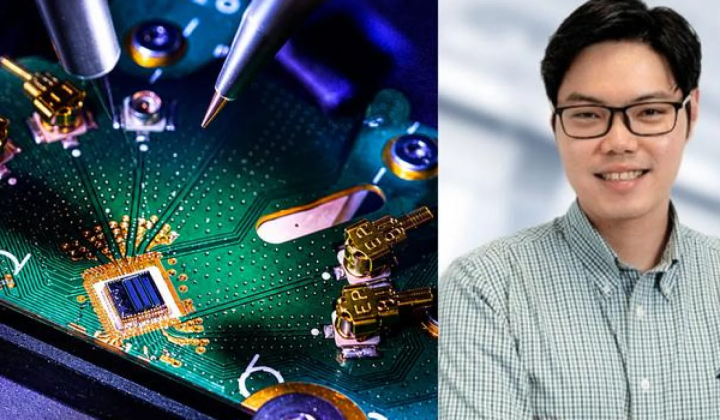
New Silicon Chip Generates Random Numbers
According to НВ — Техно: A team led by Assistant Professor Charles Lim from the National University of Singapore (NUS) has built a silicon chip that generates random numbers without relying on any measurement device. This breakthrough tackles a major security flaw in digital encryption systems. According to Lim, the invention paves the way for integrating practical, self-checking quantum generators into compact and secure commercial setups. For context, current encryption methods often depend on predictable algorithms, making them vulnerable to sophisticated attacks, whereas this chip leverages quantum mechanics for truly unpredictable outputs.
Technical Specs and Performance
The researchers, working at NUS' Centre for Quantum Technologies alongside the university's spin-off Squareroot8 Technologies, created a chip that combines a signal encoder and an optical detector on a single silicon platform. It was manufactured using a standard process on 200-millimeter (8-inch) wafers. The device operates reliably at room temperature, eliminating the need for cryogenic cooling. To address phase-change effects that impact brightness in silicon light modulators, the team introduced a control method.
During testing, the chip's detector achieved an overall efficiency of 69.1%, surpassing the protocol's minimum requirement of 67%. The experimental system generates 64 bits per second-while slower than conventional quantum generators that can exceed 100 gigabits per second, it shows promise for future upgrades. The team's lab photodiodes reached 92.4% efficiency, and computer simulations indicate that future chip versions could deliver speeds up to 68 megabits per second. Findings were published in the journal PRX Quantum.
This innovation is significant for advancing quantum technologies, as it provides a foundation for more secure digital encryption systems. The quality of random number generation is critical to data integrity and confidentiality. Further research could refine this technology, opening new opportunities for deployment across sectors like finance and information technology.
In a related development, researchers from Switzerland have created a device that generates perfectly random numbers, enhancing security protocols in various applications. This innovation aligns with the ongoing efforts to improve encryption technologies and could complement the advancements made by Singapore's team. For more details on this breakthrough, you can read about the Swiss random number generator.

Read also