Iran Launches Missile Barrage at Gulf Bases and Israel Following U.S.-Israeli Strikes on Tehran

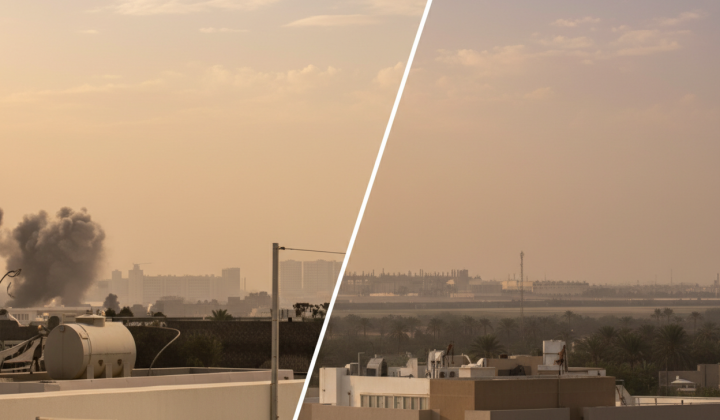
Conflict Escalates Sharply in the Persian Gulf Region
According to Главком: A major escalation of conflict occurred in the Persian Gulf region on February 28, 2026. In response to joint U.S. and Israeli strikes on Tehran, Iran carried out a series of ballistic missile attacks. The targets included American military bases located in Kuwait, Bahrain, Qatar, and the United Arab Emirates, as well as Israeli territory. These events prompted several countries to close their airspace to civilian flights. This exchange marks one of the most direct confrontations between these adversaries in recent years, raising immediate global security concerns.
Explosions were heard overnight in Abu Dhabi and Dubai as a result of the Iranian attacks. The Israel Defense Forces (IDAF) confirmed the launch of missiles from Iran. Among the targets struck was a U.S. Naval Forces logistics facility in Bahrain, specifically the United States Fifth Fleet service center. According to the Fars agency, Iran attacked several American bases in Kuwait, the UAE, Qatar, and Bahrain. Authorities in Abu Dhabi also reported the interception of Iranian missiles.
Israeli Response and Broader Consequences
In an emergency video address, Israeli Prime Minister Benjamin Netanyahu confirmed the start of a military operation codenamed 'Lion's Roar'.
Iran's Foreign Minister stated: 'Iran's response will be attacks on all U.S. military bases in the region.'
These events point to a sharp intensification of the regional conflict, with serious implications not only for the nations directly involved but for the entire Middle East.
In reaction to the hostilities, Qatar, Kuwait, and the UAE closed their airspace to civilian aviation, underscoring the severity of the situation and the danger present in the region. These measures are likely to disrupt air travel and impact public sentiment in the affected countries. The situation remains tense, and further developments could have unpredictable consequences for regional stability. The closures highlight the immediate risks to international air traffic and the potential for significant economic ripple effects.
The surge in violence in the Persian Gulf underscores the growing tensions between the U.S., Israel, and Iran, which threaten to spiral into a broader regional war. In this volatile climate, international diplomatic efforts to de-escalate the situation and restore stability are critically important.

Read also