Taiwan is just a castle at the gates: Analysis of China's global expansion in 2026

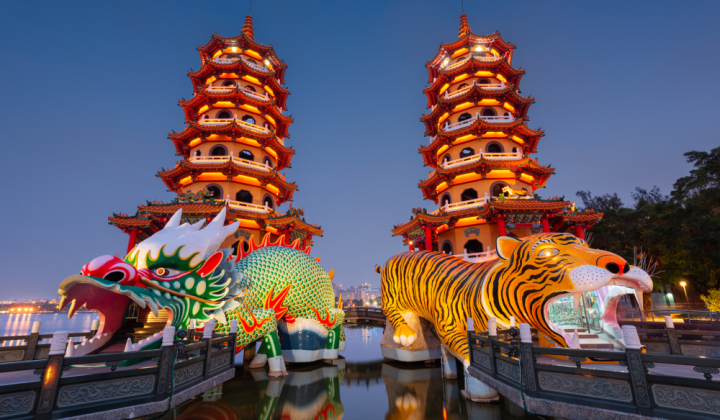
The question of Taiwan today falls into the most nerve-racking area of global geopolitics. But while for Beijing the island is an 'existential symbol', everything planned beyond it is the cold and pragmatic architecture of global domination. Taiwan is not the end; it is just the beginning of a new reality.
GSI 2026 Doctrine: 'Chinese-style security'
The updated security doctrine of the People's Republic of China (Global Security Initiative - GSI), actively promoted in 2026, signals a fundamental shift: Beijing has transitioned from 'defending borders' to 'exporting stability'.
The main innovation is the official merger of economic security and military power into a single tool. The three pillars of the new Chinese strategy:
-
The principle of 'indivisible security': The expansion of Western alliances (AUKUS, QUAD) is now interpreted by Beijing as a direct threat. This gives China the 'moral right' to take preemptive strikes and actions anywhere in the world.
-
Technological sovereignty: Control over rare earth metal supply chains has become a weapon. The export ban to Japan is not a trade dispute, but the 'first shot' in a major technological war.
-
Alternative legitimacy: China is aggressively pushing the US out of its role as the 'global policeman', acting as a mediator in the Global South (case studies in Venezuela and the Middle East). This is a world-building effort where the rules are dictated not by Washington, but by Beijing.
Geopolitical queue: Who's next?
Taiwan is the castle at the gates. If China cracks it, the entire US security system in Asia will collapse like a house of cards. Here is a list of priority areas for expansion in the 'world after Taiwan':
1. The Philippines and the South China Sea (SCS)
The hottest spot of 2026. Beijing claims the 'nine-dash line'. Control over Scarborough Shoal and Second Thomas Shoal gives the PRC power over trade routes worth $3 trillion a year. China is already applying 'anaconda tactics' here, using water cannons and ramming tactics against Philippine vessels.
2. Japan (Senkaku Islands)
Following the hypothetical fall of Taiwan, Japan becomes China's main military rival in the region. Claims over the Diaoyu Islands (Senkaku) and the already unfolding 'rare earth' economic war are preparations for a direct confrontation.
3. Indian frontier (Himalayas)
Conflicts in Arunachal Pradesh allow China to keep India in constant tension. Beijing deliberately distracts Delhi's resources from the ocean to the land, neutralizing its main demographic competitor.
4. Global logistics network (Ports)
The next target of expansion is not territories, but hubs. China already controls or has stakes in over 90 ports worldwide (from Greece to Pakistan). This is a 'soft occupation' of the planet's critical infrastructure.
Summary: 'Chinese Lake' instead of the Pacific Ocean
My conclusion is clear and harsh: the strategy 'after Taiwan' is not about seizing new lands. It is about turning the Pacific Ocean into an internal 'Chinese Lake'.
If the West allows the 'reconquista' of Taiwan, it will not just lose the island — it will lose freedom of navigation, control over technologies, and the right to security. The castle will be breached, and the gates to a new world order dominated by Beijing will swing wide open.

Read also