Online Deferrals via the Reserve+ App: What Ukrainians Can Expect in 2026


Martial Law in Ukraine and the Process for Obtaining Deferrals
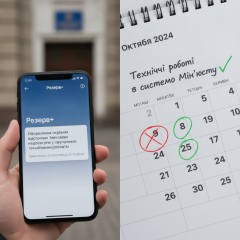
According to Главком: In 2026, Ukraine remains under martial law with a general mobilization in effect. The law clearly defines which citizens qualify for deferrals from conscription. The application process has gone digital, and certain deferrals can now be obtained online through the 'Reserve+' app, eliminating the need to visit territorial recruitment centers (TCCs). This shift aims to streamline bureaucracy and reduce administrative burdens for eligible individuals.
The rules and grounds for granting a deferral are outlined in Article 23 of Ukraine's law 'On Mobilization Training and Mobilization.' The application procedure and required documents are set by Cabinet of Ministers Resolution No. 560. Notably, family-based deferrals are not granted if there is overdue child support totaling more than three months' worth of payments. Health-based deferrals are available to those deemed temporarily unfit for service by a military medical commission (MMC), valid for 6 to 12 months.
Under current legislation, teachers seeking a deferral must work at their primary job at least 0.75 of a full-time position. However, fully automatic deferral processing through the 'Reserve+' app is only available for specific groups, including students, doctoral candidates, postdoctoral researchers, persons with disabilities, and parents of three or more children. The online system pulls data from the Unified State Electronic Database on Education (USEDE), the Pension Fund registry, the Ministry of Social Policy, and the State Register of Civil Status Acts.
Categories of Citizens Eligible for Deferrals
Individuals who receive a deferral remain subject to military service obligations and must comply with registration rules. The deferral is revoked if the grounds for granting it cease to exist.
Several categories of citizens are entitled to deferrals in Ukraine. These include:
- Family circumstances and child protection:
- Parents of three or more children: men and women supporting at least three children under 18.
- Single parents: individuals raising a child (or children) under 18 alone.
- Caring for a child with a disability: parents, guardians, or caregivers of a child with a disability under 18, or an adult child with a Group I or II disability.
- Children with severe illnesses: those raising a child with severe perinatal nervous system damage, severe congenital malformations, rare orphan diseases, cancer, cerebral palsy, etc.
- Guardians: individuals authorized to care for orphans or children deprived of parental care under 18.
- Ongoing care for relatives:
- Citizens providing constant care to a sick spouse, child, or their own parents (or spouse's parents) who require continuous assistance.
- Citizens caring for parents with a Group I or II disability, provided no other able-bodied persons are legally obligated to support them.
- Health status:
- Individuals recognized as having a Group I, II, or III disability.
- Those deemed temporarily unfit for military service by an MMC due to health reasons.
- Education and research:
- Full-time or dual-format students pursuing a higher education level than previously attained.
- Doctoral candidates, postdoctoral researchers, and interns.
- Research and teaching staff at higher education institutions, specialized pre-university schools, and research facilities who hold an academic degree.
- School and college teachers working at least 0.75 of a full-time position at their primary job.
- Professional activities and reservation:
- Reserved employees of enterprises critical to the economy.
- Judges, Constitutional Court judges, members of the High Council of Justice, and the High Qualification Commission of Judges.
- People's Deputies of Ukraine and deputies of the Verkhovna Rada of the Autonomous Republic of Crimea.
- Employees of military command bodies, military units, the Ministry of Defense, the Security Service of Ukraine, the Foreign Intelligence Service, the National Guard, the State Border Guard Service, and the National Police.
- Citizens whose close relatives died or went missing during the Anti-Terrorist Operation (ATO)/Joint Forces Operation (JFO) or while ensuring national security and defense.
In summary, the digitalization of the deferral process in 2026 allows many Ukrainians to simplify obtaining a deferral from conscription. However, it remains critical to meet all legal conditions and requirements to avoid losing the deferral.
Under martial law in Ukraine, timely and correct filing for deferrals is increasingly important. The digitalization of this process through the 'Reserve+' app not only simplifies the procedure but also helps avoid queues and delays, which can be critical for those needing to protect their rights. At the same time, compliance with legal standards is mandatory, as any violation could lead to the cancellation of the granted deferral.
As Ukraine adapts to the ongoing challenges of martial law, it's essential to stay informed about the evolving mobilization landscape. The recent updates highlight significant changes to the rules governing military service obligations. For a detailed overview of the latest mobilization regulations that will take effect soon, including key changes that may impact various groups, check out this article on Ukraine's new mobilization rules.

Read also