A New Bird Species Has Been Identified in Japan for the First Time in Four Decades

Discovery of a New Avian Species in Japan
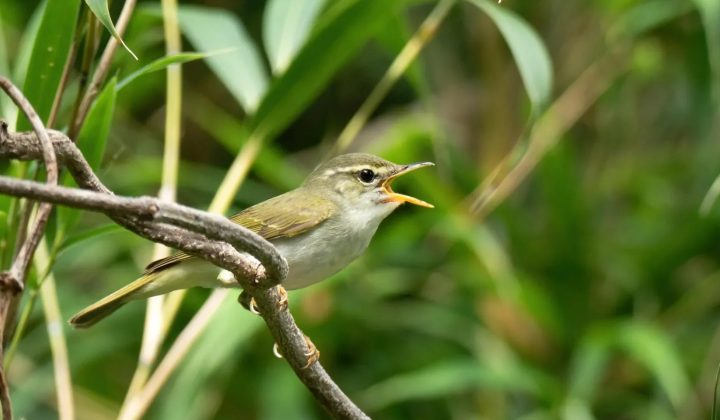
According to НВ — Техно: On June 24, 2026, scientists announced the identification of a previously unknown bird species in Japan: the Tokara leaf warbler (Phylloscopus tokaraensis). This marks the country’s first confirmed new avian species in over 40 years, validated through genetic testing. The research revealed that the Tokara leaf warbler is distinct from the previously known Izu leaf warbler (Phylloscopus ijimae), with differences found in both its DNA and song patterns.
Genetic Research and Species Conservation
The Izu leaf warbler inhabits the Izu Islands and the Tokara Islands, which lie roughly 1,000 kilometers southwest of Tokyo. The Tokara Islands span just over 100 square kilometers across twelve islands. Researchers first uncovered genetic evidence of differences between these bird populations a decade ago, and a recent whole-genome analysis has now confirmed those distinctions.
The scientific work was conducted by researchers from Uppsala University, the University of Gothenburg, and two Japanese institutions. Both the Tokara leaf warbler and the Izu leaf warbler exhibit extremely low genetic diversity. The Izu leaf warbler is classified as vulnerable by the International Union for Conservation of Nature and is protected in Japan as a 'natural monument.'
This demonstrates how crucial it is to employ genetic techniques to uncover hidden biodiversity during a global biodiversity crisis. These methods can provide a more comprehensive foundation for future conservation efforts.
Per Alström, Uppsala University
The study of the Tokara leaf warbler opens new avenues for exploring Japan’s biodiversity and underscores the importance of genetic tools in scientific research.
This discovery represents a significant step in understanding Japan’s biodiversity, which faces mounting threats from climate change and human activity. Using genetic approaches to identify new bird species can serve as a basis for further studies and conservation initiatives-an especially urgent need as ecosystem pressures grow. It also highlights the critical importance of preserving natural habitats to sustain species diversity.
In addition to the remarkable discovery of the Tokara leaf warbler, the ongoing exploration of Japan's unique ecosystems reveals fascinating adaptations among various species. For instance, researchers recently identified a new spider that disguises itself as a deadly fungus to evade predators. This highlights the intricate relationships within biodiversity, emphasizing the need for continued research and conservation efforts.

Read also