Archaeologists Launch Study of Newly Discovered Stone Complex High in Argentina’s Mountains

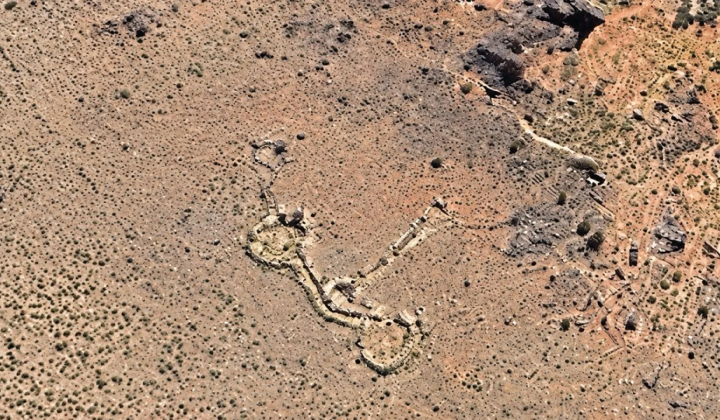
Discovery of a Stone Structure Cluster in the Cordillera del Tigre
According to НВ — Техно: At an elevation exceeding 3,000 meters in Argentina’s Cordillera del Tigre mountain range, researchers have uncovered an extensive and previously unknown complex of large geometric stone constructions. This remarkable find has sparked an international archaeological initiative involving Argentine and Spanish experts under the ArqueoAndes project. The site features massive circular enclosures measuring between 27 and 35 meters in diameter, interconnected by passageways, stone walls, and trenches.
The complex was initially identified remotely in May 2025. Mendoza-based mountaineer Carlos Gobbi documented the location and, on February 14, 2026, he and colleagues Adrián Radich and Gabriel Orofino reached the site after a challenging four-day expedition. The remote terrain presents significant obstacles due to scarce water sources, rugged topography, and lack of communication infrastructure, complicating fieldwork efforts.
Ongoing Investigations and Theoretical Interpretations
Current research, conducted through collaboration between the Argentine Institute of Snow, Glaciology, and Environmental Science (IANIGLA-CONICET) and the University of Jaén in Spain, involves archaeological field surveys, sediment analysis, and remote sensing techniques. To date, no pottery shards, food remnants, or surface evidence of permanent habitation have been discovered, making it difficult to ascertain the complex’s original function.
- Researchers propose the site may have served ritualistic, symbolic, or ceremonial purposes.
- There is speculation about connections to Incan heritage or pre-Columbian populations.
It is important to note that no prior archaeological records mention a similar site in Mendoza. For additional context, the Tiwanaku archaeological zone in Bolivia has yielded 45 ceremonial artifacts attributed to the Tiwanaku culture, dating back approximately 1,500 years. These objects include ceramic vessels, sculptures, stone knives, bottles, and a gold head inlaid with blue stone. Findings also comprise remains of fish, camelids, and birds, highlighting the rich cultural environment of this ancient civilization.
The discovery of this complex in the Cordillera del Tigre underscores the significance of archaeological exploration in under-investigated regions, which may hold substantial cultural treasures.
Source: Archaeological Study
Further investigation is expected to shed light on the social and religious dynamics of ancient societies and their interactions with neighboring cultures such as the Incas. This breakthrough could provide a pivotal contribution to the understanding of South American history and archaeology.
As researchers delve deeper into the mysteries of the Cordillera del Tigre, parallels can be drawn to other significant archaeological findings, such as those at Göbekli Tepe. The recent discovery of two intact burials at this ancient site offers insights into the residential aspects of early societies, prompting further questions about the societal structures and rituals that may have existed in similar complexes. Understanding these connections can provide a broader perspective on the significance of the newly uncovered stone structures in Argentina.

Read also