Humanoid Robots Perform Their First Surgeries in California

Breakthroughs in Medical Robotics
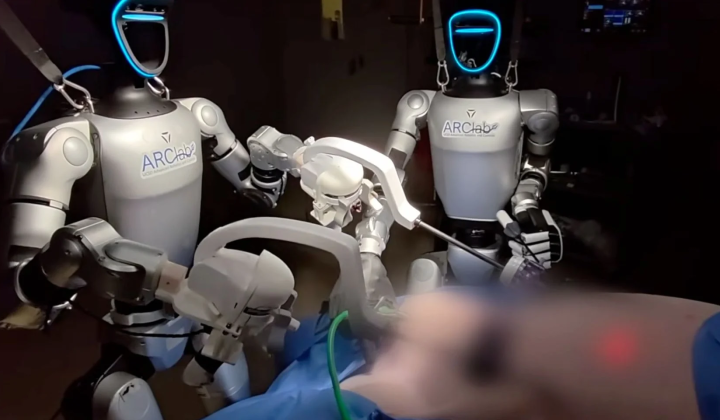
According to НВ — Техно: The University of California, San Diego (UCSD) has become the first institution worldwide to carry out surgical procedures using remotely controlled humanoid robots. During these experimental trials, one operation involved removing a gallbladder with both a human and a robot working together, while another procedure was performed entirely by two robots. Both surgeries were conducted on large, non-primate mammals.
The Surgie Humanoid Robots
Named Surgie, the humanoid robots used in this research stand about 1.5 meters tall and weigh 27 kilograms. Specially designed adapters allow them to handle standard surgical instruments. To successfully complete the procedures, the robots required repeated calibration and faced challenges related to communication lag between the surgeon's commands and the robot's movements.
Christian Lunetta, director of the hospital's neuromotor rehabilitation unit, noted: 'At first, we feared the patient might have a negative reaction.'
However, he expressed satisfaction with the outcomes, emphasizing that 'the robot was designed to spark curiosity, and its movements suggest a wide range of potential applications.'
For context, current robotic surgical systems typically weigh around 1,800 pounds (816 kilograms)-a stark contrast to the lightweight Surgie robots. Meanwhile, in Milan, another robot named Alter-Ego is undergoing trials. Standing 1.2 meters tall, it is designed to handle routine tasks for medical staff and has been tested since April in a ward treating patients with amyotrophic lateral sclerosis (ALS).
Ultimately, UCSD's research opens new frontiers in medical robotics, showcasing the potential for robots in surgical settings and their possible future applications. This could significantly transform surgical approaches by enhancing precision and reducing risks for patients. Trials of other robots, like Alter-Ego, further highlight the expanding role of robotics in medicine, potentially leading to new standards in treatment and patient care.
In addition to the groundbreaking procedures at UCSD, similar advancements are taking place in Italy, where a 1.2-meter robot has begun assisting patients with ALS. This innovative technology not only highlights the growing role of robotics in healthcare but also raises questions about the future integration of robots in various medical settings. To learn more about this robot's impact on patient care, read about its deployment in Italy here.

Read also