Leg-Winged Dinosaur Discovery in China Rewrites Feather Evolution

New Dinosaur Species Unveiled
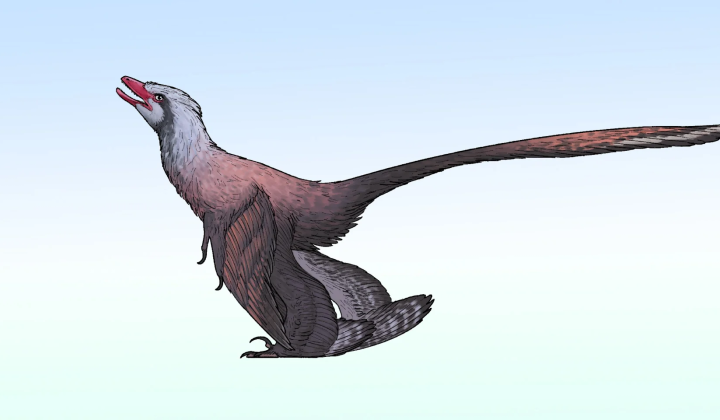
According to НВ — Техно: On June 24, at 18:28, researchers announced the identification of a previously unknown dinosaur species, officially named Changzhousaurus sinensis. This creature roamed what is now China approximately 120 million years ago and stands out as the only known member of the paravian group to possess both large feathers on its hind limbs and elongated tail feathers. The dinosaur measured about 34 cm in total body length, featured 16 greatly extended tail feathers, and had primary wing feathers reaching roughly 12 cm.
Key Traits of Changzhousaurus sinensis
Changzhousaurus sinensis ranks among the smallest non-avian theropods ever documented. It belongs to the dromaeosaurid family within the theropod order. The dinosaur had around 16 significantly elongated tail feathers, each about four times the length of its thigh bone. Its primary flight feathers were approximately 12 cm long.
This finding holds major scientific importance because it reveals a combination-large primary feathers on the forelimbs alongside feathers on the legs and tail-that had never before been observed in any known dinosaur.
Dr. Xing Xu, a paleontologist at the Institute of Vertebrate Paleontology and Paleoanthropology of the Chinese Academy of Sciences, noted: 'Remarkably, these fossils have greatly expanded our understanding of bird origins, showing that feathers, aerodynamic behavior, and other features once thought unique to Avialae also appear in other paravian groups.'
Dr. Xu also emphasized that this discovery underscores the complexity of early paravian evolution and raises several conceptual and methodological questions for research on related species. In this context, it is worth noting that a new predatory dinosaur species, Jian changmaensis, was also found in the Changma Basin in China's Gansu Province, dating to the same 120-million-year period. That finding further highlights the significance of ongoing studies in the region.
The identification of Changzhousaurus sinensis represents a major contribution to our grasp of dinosaur and bird evolution, demonstrating that feathers may have evolved across multiple theropod lineages. It also opens fresh avenues for further research, particularly into evolutionary pathways and relationships among different dinosaur species. Together with the discovery of Jian changmaensis, these finds suggest that dinosaur diversity during that era was far greater than previously assumed.
In addition to the remarkable findings regarding the newly discovered duck-billed dinosaur in Romania, the Changzhousaurus sinensis discovery adds a fascinating layer to our understanding of dinosaur evolution. The coexistence of varied feather types among these ancient species prompts further exploration into the evolutionary pathways that shaped their development.

Read also