Over 2,300-Year-Old Hellenistic Ritual Complex Unearthed in North Macedonia

Ritual Complex Discovery at Gradishte
According to НВ — Техно: Archaeologists have uncovered a rare Hellenistic ritual complex at the Gradishte site in North Macedonia, dating back more than 2,300 years. The finds include a sacred wall, storage vessels, imported pottery, animal bones, and fragments of a ceremonial couch. This complex was likely used for sacrifices and feasting, highlighting its significance in ancient ritual practices.
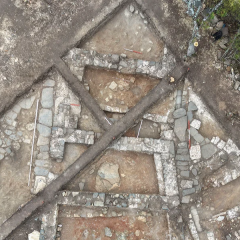
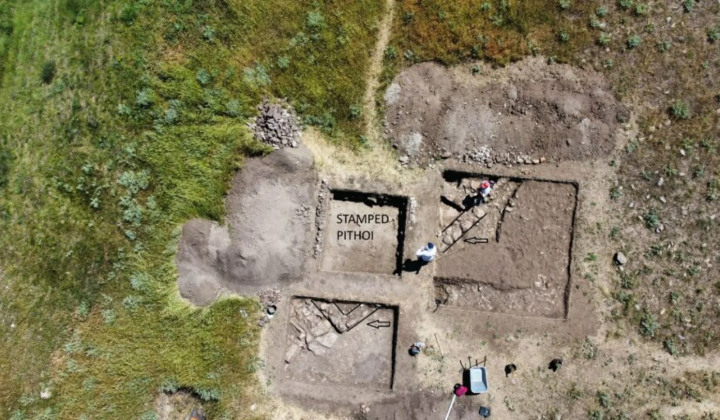
Excavations at Gradishte are being led by Dejan Georgievski. Among the artifacts discovered are remnants of what may have been a sacred enclosure wall and a building containing storage vessels. Also found were imported pottery, animal bones, and fragments of a richly decorated ceremonial couch. These discoveries were made on the Lower Terrace of the ancient settlement near Mlado Nagorichane, where previous excavations had revealed 4th century BC rock-cut structures, stone formations resembling burial mounds, and small pits and vessels used for votive offerings.
Artifacts and Their Significance
Evidence of the complex's ritual use includes a basin for ritual purification and a large storage vessel embossed with the image of a female deity, possibly Demeter. This deity is depicted holding a cornucopia and pouring a drink onto a tripod. In a small room that was uncovered, bones of wild boar and goat were found, along with imported Hellenistic drinking vessels and fragments of a decorated couch (kline).
To the east of the stone structures, walls of a building with fragments of pithoi were discovered. One pithos features a rim adorned with impressions from a ring depicting a female deity, again holding a cornucopia and pouring water from a kantharos onto a tripod. This may point to rituals connected with agriculture and fertility, which were central to the culture of the time.
South of the discovered structures, part of a wall was found that may have functioned as a peribolos, along with another small room containing a large quantity of animal bones, including wild boar and goat. This room also yielded a collection of Hellenistic pottery, including amphorae, hydriae, drinking vessels, oil lamps, and terracotta figurines. Among the couch finds are a table base, fragments of a dining couch (kline), part of a molded couch leg, and an applique depicting a deity holding a phiale. Similar decorative couch elements have previously been found in tombs at Pella and in the royal tombs at Aegae.
In 2025, the remains of a lost ancient city were identified at the Gradishte site, which may turn out to be the capital of the kingdom of Lyncestis from the 7th century BC. That discovery was made by a team of researchers from California State Polytechnic University, Humboldt, in collaboration with the local Institute and Museum of Archaeology. The 2025 excavations took place at the Gradishte site near the town of Crnobuki in North Macedonia, and the ruins may belong to the ancient city of Lynkos.
The discovery of the ritual complex at Gradishte underscores North Macedonia's importance in the history of Hellenistic culture and religion. These finds could help archaeologists better understand ritual practices related to agriculture and fertility, which played a major role in the lives of ancient people. Ongoing research at this site may also shed light on the interaction between different cultures in the region and the development of ancient cities within the broader context of Macedonian history.
The recent discovery at Gradishte not only sheds light on the ritual practices of the Hellenistic period but also parallels other significant archaeological finds across Europe. For instance, a remarkable burial complex from the 6th century BCE in Italy has revealed a chariot, indicating the importance of burial rituals in ancient cultures. Such discoveries enhance our understanding of the interconnectedness of ancient societies and their ceremonial traditions.

Read also