Language Expert Breaks Down the Difference Between 'Humka' and 'Rezynka' for Ukrainian Speakers

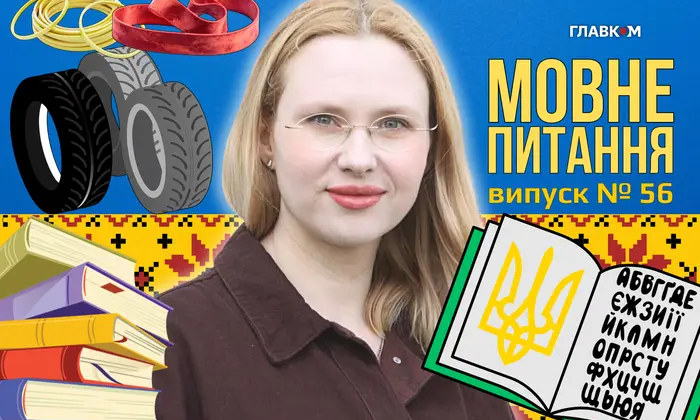
Language Matters
According to Главком: In a new series titled 'Language Matters' on the 'Glavcom' website, linguist Olha Vasylieva addresses pressing language questions. This edition focuses on distinguishing between the words 'humka' and 'rezynka', the correctness of the verbs 'nazhaty' and 'natysnuty', 'yisy' and 'yish', as well as the use of the pronoun 'nashyi', the gerund 'bachachy', and the term 'naduzhyvannya'. Additionally, the translation of the phrase 'otverzhenie partnera' (partner rejection), the usage of the word 'bahatokhodivka', the spelling of 'vidsiohodni', inclusive writing, and the word 'brodyazhyty' are discussed.
The words 'gumma' and 'resina', both derived from Latin, originally mean 'resin'. Linguist Oleksandr Avramenko previously suggested replacing 'rezynka' with 'styazhka'. It is noted that the word 'nazhaty' is classified as colloquial in dictionaries. This is supported by quotations from Ukrainian classics:
“Doctor Tahabat pressed the button”
Mykola Khvylovy
“Everything that had to be pressed during this time was stacked in sheaves, carted into stacks, threshed, winnowed...”
Panas Myrny
According to the Hrinchenko dictionary, the word 'nazhaty' originates from 'nazhynaty', not from 'nazhymaty'.
Normative Usage and Language Nuances
The pronoun 'nashyi' is recorded in the dictionary of Western Polissian dialects. Mykhailo Hrushevsky is known to have used 'nashyi', stating: 'We must fight for good and overcome everything that lowers the level of our life, hindering our national development.' The normative form of the second person singular of the verb 'yisty' (to eat) is exclusively 'yisy'. Various authors, including Borys Antonenko-Davydovych, emphasize this, noting that exceptions are the verbs 'daty' (to give), 'yisty' (to eat), 'vidpovisty' (to answer), and 'rozpovisty' (to tell).
The gerund 'bachachy' appears 8,000 times in the GRAC corpus, indicating its prevalence in literature. The words 'naduzhyvaty' and 'naduzhyvannya' are also found in the academic explanatory dictionary SUM-20, where 'naduzhyvaty' is defined as 'to misuse something; less commonly, to misuse of something'. In the Krymsky dictionary, the term 'otverzhenie' is translated as 'vidkynennya' (rejection).
The word 'bahatokhodivka' is used in works by authors such as Yuriy Andrukhovych, Lyuko Dashvar, and Leonid Kuchma. The word 'brodyazhyty' has a long history of use; for instance, Taras Shevchenko employed it in his poetry: 'The Cossack floated across the Dniester to this side, Having left his freedom, As a vagabond...'. Additionally, the word 'volotsyuzhyty' is found in a work by Oles Honchar.
At the Darnytsia railcar repair plant, a new tightening section has become operational. A furniture set consists of 18 types of panels made with ties for coupling. Floor screed is a mixture of cement and sand in a 1:3 ratio. Questions about language nuances can be sent to [email protected] with the subject line 'Language Matters'.
This new series on the 'Glavcom' website aims to explore various aspects of the Ukrainian language and enhance linguistic literacy among readers. Discussing language nuances and their normative standards is important as it fosters a culture of language within society. Readers can gain additional knowledge about word usage, enriching their vocabulary and broadening their understanding of linguistic norms.
In addition to the distinctions highlighted by Olha Vasylieva, understanding language nuances can be further enriched by exploring the correct naming of the week after Easter and addressing common reader inquiries. This broader context emphasizes the ongoing evolution and complexity of language, making it essential for speakers to stay informed about accurate usage.

Read also