Ukrainian EW Systems Are Throwing Russian Ballistic Missiles Off Course: What We Know So Far

How Ukrainian Electronic Warfare Systems Are Disrupting Russian Missiles
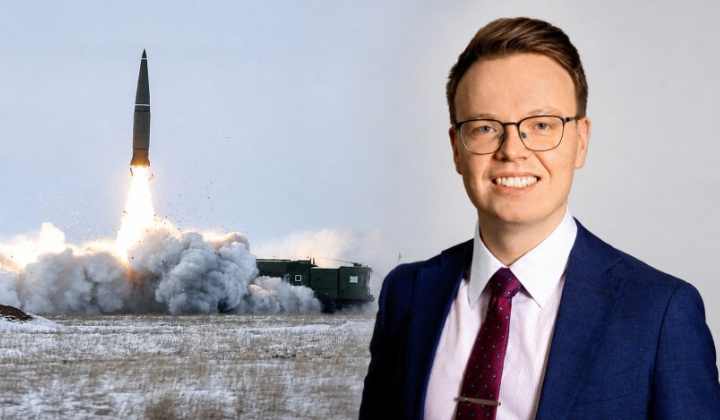
According to ХВИЛЯ: Recent analysis suggests that Ukraine's electronic warfare (EW) systems can successfully redirect Russian ballistic missiles from their intended flight paths. A claim has emerged that 58 out of 59 Kh-47M2 Kinzhal air-launched ballistic missiles were neutralized by an unnamed EW project, as reported by the Kyiv Independent. Missile analyst Fabian Hoffmann, in his newsletter Missile Matters, examined the technical feasibility of jamming the satellite navigation systems these missiles rely on-a critical factor in this ongoing battle.
Technical Breakdown of the Jamming Process
According to Hoffmann, Russian short- and medium-range ballistic missiles use a hybrid guidance system that pairs an inertial measurement unit (IMU) with a GLONASS satellite navigation receiver. However, the IMU gradually loses accuracy over time due to integration drift. For example, the export version of the Iskander-M (9M720 missile) has a circular error probable of up to 200 meters at a range of 300 km when relying solely on the IMU. In contrast, with GLONASS corrections, modern conventional ballistic missiles can strike within 5 to 10 meters of their target.
GLONASS satellites transmit signals on two frequencies: L1 (around 1602 MHz) and L2 (around 1246 MHz), operating at an altitude of roughly 19,140 km. The Iskander 9M723 missile reaches altitudes of 50–60 km during flight, or up to 100 km on a lofted trajectory. Hoffmann outlines four conditions for successful jamming:
- the jammer must have a steep line-of-sight to the missile;
- the station must be active and within range before the missile's cruise phase ends;
- jamming must be sustained long enough for inertial drift to build up a significant error;
- suppressing a protected military GNSS receiver requires a powerful transmitter, a dedicated radar for tracking high-speed targets, a robust power supply, and a large antenna.
The missile's total flight time is only a few minutes, making the EW task even more challenging. Additionally, Russia has struggled to fully replace Western electronic components in the guidance systems of its long-range weapons, which may give Ukrainian systems an edge. The ongoing conflict in the Middle East has also created a global shortage of anti-ballistic missile interceptors, underscoring the importance of developing and improving EW capabilities in Ukraine.
Advancements in Ukraine's electronic warfare technology could significantly shape future military operations in the region. Successfully jamming satellite signals may degrade the effectiveness of Russian ballistic missiles, turning this into not just a technological contest but a strategic one. For Ukraine, continued refinement of its EW systems is crucial for national defense. Meanwhile, Russia's difficulties in restoring its own technological base could limit its military options down the line.
As the conflict evolves, the integration of advanced technologies like AI is becoming increasingly vital. Recent statements from Ukrainian officials highlight the potential for artificial intelligence to take over drone operations, enhancing strategic capabilities on the battlefield. This shift towards AI-driven solutions could significantly alter the dynamics of warfare, especially in conjunction with electronic warfare systems that disrupt missile guidance. To explore this development further, read about how AI is set to transform drone usage in the ongoing conflict.

Read also