University of Chicago Develops Heart Diagnostic Patch with 99.6% Accuracy

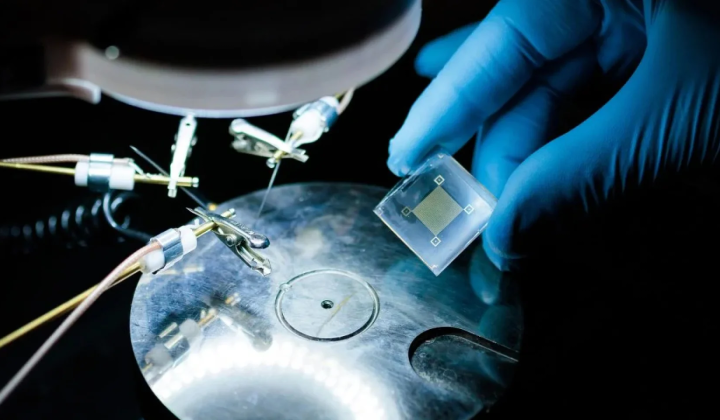
New Health Data Processing Patch
According to НВ — Техно: Researchers from the Pritzker School of Molecular Engineering at the University of Chicago, in collaboration with Argonne National Laboratory, have created an innovative patch designed to process health data directly on the human body. Unlike smartwatches that rely on external servers for analysis, this device performs on-body data processing. By using a novel technique to print organic electrochemical transistors onto flexible surfaces, the team has developed a device that could serve as a 'personal rapid doctor' integrated into wearable technology.
Research Findings
Study co-leader Sihong Wang stated that the project aims to develop smarter portable and implantable devices. During trials, the new technology yielded impressive results:
- It achieved 99.6% accuracy in detecting electrical waves of the heart.
- It reached 83.5% accuracy in predicting heart attack risk.
Testing involved a pre-trained algorithm designed to address ventricular fibrillation, a dangerous heart rhythm disorder.
Co-authors Jixuan Zhao and Fangfang Xia emphasized that this technology allows information to be analyzed right at its source. The team also created a polymer gel that hardens under ultraviolet light, enhancing the device's functionality. Wang added that in a real-world device, neural network parameters depend on the material's physical properties, history, and constraints.
A key feature of the technology is the ability to produce up to 10,000 organic electrochemical transistors per square centimeter. However, the team encountered several challenges during development:
- The flexible base is sensitive to high temperatures and solvents.
- The gel electrolyte can spread, potentially causing short circuits.
The researchers' next goal is to integrate the computational array with flexible wireless communication systems and more advanced sensors, opening new possibilities for health monitoring.
This health-monitoring patch represents a major step toward personalized medicine. By enabling on-body data processing, the technology could significantly improve early detection and prevention of heart disease. The team's success in achieving high accuracy for heart electrical wave detection and risk prediction paves the way for integrating wearable tech into daily life and medical practice.
As advancements in heart disease detection continue, a recent study shows that AI can achieve an impressive 94% accuracy in identifying heart conditions through ECG data. This breakthrough highlights the growing role of technology in personal health monitoring and complements the innovative findings from the University of Chicago. For more insights on this AI-driven approach to heart disease diagnosis, read our article on AI's effectiveness in ECG analysis.

Read also