Rare Roman Lime Kiln Unearthed During Highway Expansion in Hungary

Excavations Near Bicske
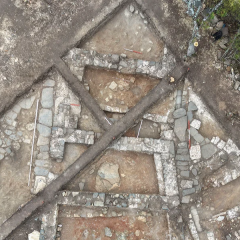
According to НВ — Техно: A Roman-era lime kiln and artifacts spanning multiple historical periods have been discovered during excavations near Bicske, Hungary, conducted as part of the M1 motorway expansion. The project was commissioned by the National Institute of Archaeology of the Hungarian National Museum. Field research was led by archaeologist Alexandra Kiss, with specialists from the King Saint Stephen Museum and volunteers also contributing to the work.
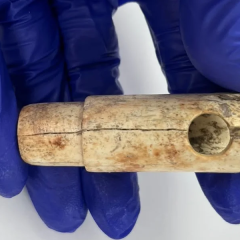
This site had already drawn archaeological interest due to earlier finds, including part of a Roman settlement, remnants of dwellings from the Árpád dynasty period, and three Roman child burials. During the latest spring excavations, additional features from the early Roman period and late Árpád era were uncovered. The team also found storage pits from the late medieval and Ottoman periods, with cattle skulls discovered at the bottom of one such pit.
Key Discoveries
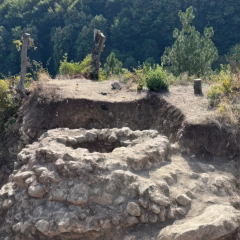
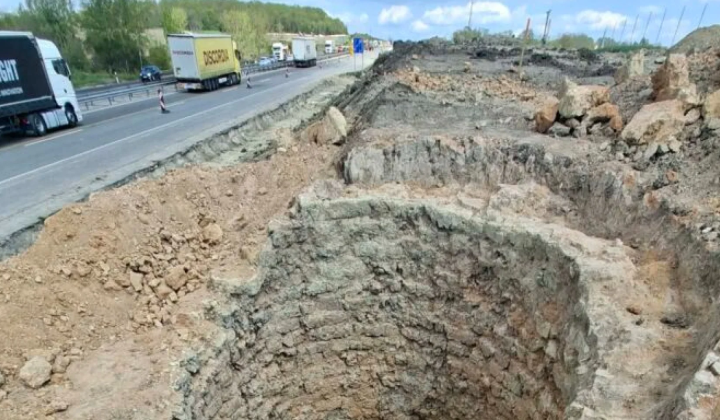
Among the most significant finds is a circular Roman lime kiln measuring approximately 2.3 meters in diameter and nearly 3 meters deep. The structure was built into a natural hillside, with walls made of unfired brick and reinforced with a layer of clay plaster. The stokehole, or firing opening, faces west, and a thin residue of lime was found on the kiln's floor and inner walls. A ledge near the base of the wall, which served as a support for limestone blocks, has also survived. To help date the kiln, researchers used associated materials, including fragments of Roman roof tiles (tegulae) and a gray bowl with an S-shaped profile.
Notably, a Roman lime kiln in such a well-preserved state has not been found in Hungary since the early 20th century, when Balint Kuzsinszky conducted excavations at Aquincum. The ongoing excavation of this Roman lime kiln near Bicske continues to deepen our understanding of the region's history.
The discovery of the Roman lime kiln and related artifacts not only highlights the historical significance of this area but also reflects Hungary's rich cultural heritage, which remains an active focus of research.
Studies of such finds can provide fresh insights into Roman technology and daily life, as well as the development of settlements in the region across different historical periods.

Read also