Cyber Police warns: how to recognize fraudsters posing as volunteers

Fraud schemes
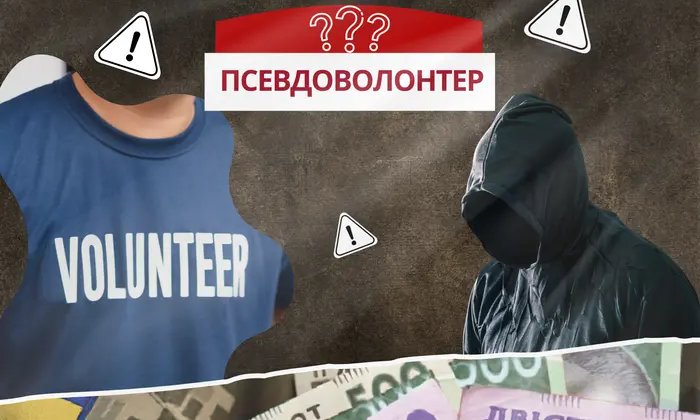
During the full-scale invasion in Ukraine, volunteering became a mass movement, but this also activated fraudsters. The police warn that pseudo-volunteers are pretending to be benefactors, military personnel, or clergymen to attract funds for the Armed Forces of Ukraine and then appropriate them. This was reported by Glavkom citing the Cyber Police.
According to glavcom.ua: Criminals most often operate on social networks and messengers, stealing photos and texts from real volunteers. They create fake accounts and use manipulative messages for emotional pressure. The funds raised by fraudsters under such publications go to their bank accounts.
In 2024, the police uncovered a case of a man who devised a story about an injured soldier, using a photo of a girl with an amputation who was injured before the war started. He fraudulently extracted nearly 300,000 UAH from people.
Signs of fake volunteers
Law enforcement recommends paying attention to the following signs of unscrupulous fundraisers:
- Lack of specific information about the fundraising.
- Lack of confirmations of previous collections.
- Manipulative text without facts.
- Strange designs and fonts.
- Profile appearance without personal photos.
How to verify fundraising
To protect yourself, effectively use these recommendations:
- Request reports on previous collections.
- Check connections with known charitable organizations.
- Look for reviews and awards from real volunteers.
- Use Google image search to verify photos.
- Contact the organization that issued the volunteer ID.
- Be vigilant and cautious, - urge the law enforcement officers.
Unfortunately, among the fraudsters were those who used their status as volunteers to organize car sales, trying to present them as humanitarian aid. Details of this scheme became known thanks to the police of Dnipropetrovsk region and Glavkom.
The head of the organization imported cars allegedly for the National Guard but actually organized their sale through a complex scheme involving women and a sales coordinator.
The Ukrainian police warns about the spread of pseudo-volunteering, where fraudsters posing as benefactors collect funds for the Armed Forces of Ukraine and then appropriate them. Fraudsters most often operate on social networks, stealing photos and texts from real volunteers. The police recommend being cautious and using verified methods to check charitable events.

Read also