Two Newly Found Planets Are Less Dense Than Cotton Candy, Astronomers Report

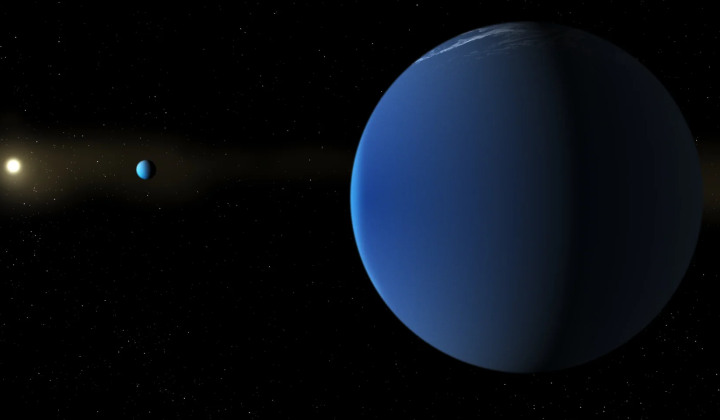
Discovery of the Ultra-Low-Density Planets TOI-791 b and TOI-791 c
According to НВ — Техно: Astronomers have identified two planets with remarkably low densities, both orbiting the F7-type dwarf star TOI-791. Named TOI-791 b and TOI-791 c, these exoplanets have densities lower than that of cotton candy and are locked in a 5:3 gravitational resonance. The discovery was made possible through eight years of observations, including data from NASA’s TESS space telescope and the ASTEP telescope stationed in Antarctica. The research effort involved teams from the University of Oxford, Université Côte d'Azur, the Côte d'Azur Observatory, and the University of Birmingham.
Planetary Characteristics
TOI-791 b and TOI-791 c are located roughly 1,110 light-years from Earth in the southern constellation Volans. Both planets are similar in size to Jupiter, yet their densities are extraordinarily low:
- TOI-791 b has a density of 0.038 grams per cubic centimeter.
- TOI-791 c has a density of 0.047 grams per cubic centimeter.
For context, Jupiter’s average density is 1.33 grams per cubic centimeter, making it 28 to 35 times denser than these newly found planets. Earth’s density, by comparison, is 5.5 grams per cubic centimeter.
Only four other multi-planet systems of this kind are known, highlighting the uniqueness of this find. TOI-791 b was first flagged as a candidate in 2019, while TOI-791 c became a candidate in 2023. Volunteers from the Planet Hunters TESS project played a key role in identifying these candidate planets, an important step in the study of these objects. Both planets have transit durations exceeding 11 hours.
Dr. George Dransfield remarked: 'Only a handful of such super-puff planets are known, and it is even rarer to find two in the same system. Their extremely low density makes them fascinating targets for understanding how planetary systems form and evolve.'
This discovery demonstrates that studying these unusual objects can yield fresh insights into the mechanisms of planet formation.
Ultimately, the new data on TOI-791 b and TOI-791 c could significantly advance our understanding of exoplanets and their evolution in space. Examining planets like these may allow scientists to broaden their knowledge of the diversity of planetary systems and their characteristics, which in turn could have implications for the search for life on other worlds.
In addition to the fascinating discoveries of TOI-791 b and TOI-791 c, advancements in technology are allowing astronomers to uncover even more about exoplanets. For instance, the recent findings from the James Webb Space Telescope revealed unprecedented temperature spikes on distant worlds, further enhancing our understanding of their atmospheres and climates.

Read also