Elena Popova: "In 2017, we will compete not with banks, but with Google, Amazon, Facebook"

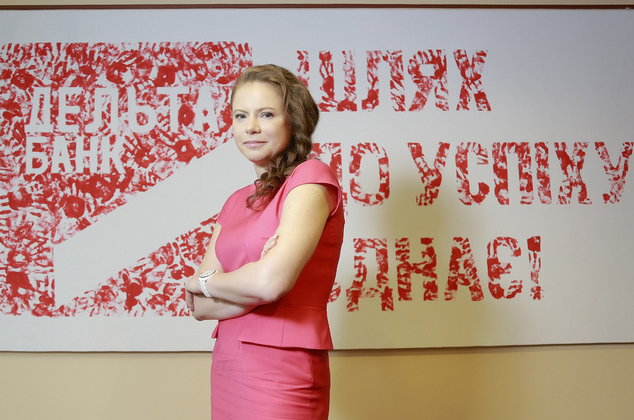
The head of the Delta Bank Board of Directors on lawsuits with Russia over Crimea, commission income, and working in conditions of information warfare
Elena Popova has been leading one of the largest banks in the country since its inception in 2006. Initially, she was the first deputy chairman of the board of the bank – Nikolai Lagun. Today, Popova is the head of the board of the fourth largest bank in the country by assets and the second non-state financial institution after PrivatBank.
As the bank actively develops, it comes under fire - recently, information about the bankruptcy of the institution began to appear in the media. Popova explains this by stating that the bank is taking an active market position, while the market itself exists in a time of constant information wars.
It is said that the bank has special relations with the National Bank of Ukraine (NBU), which allow it to withstand in the most difficult situations. However, Elena Popova does not believe that "Delta" and the NBU have developed special ties.
For example, the bank cannot get approval for its electronic money issuance rules from the banking regulator. However, "Delta" plans to compete in the world of electronic payments not only with PrivatBank but also with international global corporations. Elena Popova discussed how this will be achieved in an interview with forbes.ua.
– According to reports, Delta Bank in the first half of 2014 had a substantial negative interest margin not in favor of the bank. You are buying liabilities more expensively than you are selling assets. What is this related to?
– This is a difference in interest income and expenses. We have quite high interest expenses, and the price of hryvnia resources has significantly increased. Recently, the NBU raised the key rate from 9.5% to 12.5%. This resulted in an increase of more than 31%. This confirms the trend of rising resource costs in the country. The ratio of hryvnia liabilities to total liabilities in our bank is higher than the average in the banking system (the average share of hryvnia liabilities in the system is about 50%, in our bank it is over 60%).
At the same time, considering the specifics of our business model, the income side of our balance is formed not only from interest income but also from other operating income, including from purchased portfolios. Additionally, the bank has some of the highest commission income. We rank second in the system after PrivatBank in this indicator. In total income, about 30% of the bank's income comes from commissions.
Overall, considering all income items, the bank is conducting profitable activities, totaling 193 million hryvnias over six months.
– Your bank is in third place in terms of refinancing volumes. You received over 10.6 billion hryvnias from the NBU. What helped with this?
– We are in third place in terms of deposits from individuals. In the first and partly in the second quarter, the banking system faced a massive outflow of deposits. In this situation, the NBU, as the lender of last resort, performed its function and supported banks. To date, we have repaid almost a quarter of the refinancing received during that period under anti-crisis resolutions.
– Do you assess your position in the interbank market as aggressive?
– Absolutely not. I cannot agree that we actively participate in currency buying-selling operations. Given our business volume, the size of such operations is insignificant. We buy currency most often at the request of our clients or when there is a need and we need to support our cash register to meet our obligations. Currently, the entire market is experiencing changes in the structure of the deposit portfolio. Primarily, depositors are bringing hryvnia deposits. We observe an outflow of deposits in foreign currency. Thus, the share of foreign currency deposits is decreasing.
– Is the reason for the outflow of foreign currency deposits due to devaluation or the NBU's restrictions on withdrawing deposits?
– I would say that the outflow is primarily related to the NBU's restrictions, but also to a historically ingrained "reverential" attitude among the population towards the currencies of other countries. Although in some areas, the trend has changed, and we are encountering an influx of foreign currency deposits due to the direct risk of storing money at home.
– How do you explain the trend of inflow of hryvnia deposits?
– The initial shock related to the political situation and the overall circumstances has passed. Clients understand that life goes on, and unfortunately, there is no simple, instant solution. This is a path we must walk together. A number of factors influenced the return of depositors' trust. First of all, this is a certain political stabilization related to the appointment of the government and the democratic elections of the country's president, signing agreements with the EU, and clearly defining the direction of the path. Additionally, active work with the IMF and other foreign creditors adds optimism.
The first quarter and half of the second were very difficult for the banking system. We operated under conditions of mass distrust and deposit outflows. The head of the NBU stated that in the first half of this year, the outflow of funds from the population, excluding exchange rate fluctuations, amounted to 18%. That is, almost every fifth deposit left the system in such a short time. The situation remains quite complex; however, a positive trend has not only appeared but also consolidated. Thus, according to NBU data, in June, the banking system recorded an inflow of deposits from the population of 0.4%. This is very good news; it indicates that trust is gradually returning. We hope and work towards ensuring that the 18% of funds that the population withdrew from banks and the economy will return to the system soon. After all, such a trend will benefit everyone: clients will receive additional income and security for themselves and their savings, which is by no means a secondary issue; banks will restore their resource bases and will be able to more actively lend to the country's economy.
– Did Delta Bank launch programs aimed at restoring depositor trust?
– Certainly. We were one of the first, for example, to offer clients who prematurely terminated deposits compensation for lost interest in case of returning and depositing funds within a certain period.
The Bank in 2017
– How do you see the bank in three years?
– To be honest, I am quite tired of crisis management. I want to return to normal business: there are so many ideas, developments, and programs. We are not stopping our development projects, as the current situation is temporary, it will inevitably change, and the bank must be ready for a new life and new realities.
Historically, our bank has a well-developed retail business. We will add enhanced payment functionality to existing products. Delta Bank is now actively entering the payment market and trying to provide the most convenient channels and products for their implementation. In these unsettled times, clients primarily need a payment function. This is a basic need for any client: it is necessary to pay for a phone, kindergarten, utilities, and transfer money to parents and loved ones. Just calculate how many payments per month you and your family make. The need to preserve savings has somewhat receded to second place. Therefore, providing a convenient, accessible, secure, and understandable payment service for clients – both individuals and legal entities – is our strategic task that we are actively working on and already have some success.
– Will you buy your own network of terminals?
At this stage, we do not have our own network of payment terminals. Today we see more prospects from strategic cooperation with companies of this kind that already have a share and weight in this market. It's more beneficial than starting a business of this kind from scratch within the bank.
In the retail segment, we have strengthened our analytical block and work with databases. We have tremendous potential for this, as Delta Bank's client base numbers over 4 million. If we work qualitatively with the data we have, we can more accurately, purposefully, and individually offer services and products. We are actively working on this – we have created a separate division, purchased special IT products and systems to process data. This is quite a challenging task, but in the end, it results in a very convenient and effective solution for both clients and the bank.
– Do you plan to implement these products before 2017?
– I hope that these projects will not only be implemented but will also be in full operation by 2017. We began work on them back in 2013. We are currently in an active phase of preparation: processes are being refined, contractual bases signed, hypotheses, channels, and more are being tested.
– Who will you compete against in 2017?
– In developing our products and technologies, we aim to align with the best market standards. We look at Poland and their Alior Bank, Citibank, PKO Bank Polski SA. In Russia, we are interested in the experience of TCS Bank; in Kazakhstan, it is KaspiBank. If we talk about the Ukrainian market, it is, undoubtedly, PrivatBank. Of course, we have different competitors in different market segments, and we strive to keep track of their achievements and developments. Overall, the more competition there is, the better. Everyone benefits: both the client and the bank itself.
If we talk about 2017, I believe that the main competitors in the payment market will not be other banks but companies like Google, Facebook, Twitter, Amazon, PayPal – IT companies that are becoming banks themselves. Therefore, we also look at their offers, interfaces, profiles, and how they build business from the perspective of client comfort.
– Do you envision a model where your bank has its own internal currency?
– This is part of Delta Bank's strategy. We have submitted documents to the NBU to obtain approval for the issuance of electronic money. At this stage, we are addressing the comments of the NBU's payment systems department.
– Alexander Adarich stated that he intends to make FidoBank the Ukrainian Amazon. Do you see FidoBank as your competitor in 2017?
– Certainly. We consider everyone who actively works in this direction as competitors. But this is a very complex task in terms of platform and technology. From our side, the investment volume amounts to millions of dollars. These are significant investments in the development of the software complexes themselves and capacities for processing data.
Currently, many banks call themselves not banks but IT companies. I agree that today, in a bank, the IT focus must dominate. A bank is a combination of an IT company, quality marketing that includes understanding client needs and working with analytics, and critically important risk management. That is, a modern bank is a symbiosis of an IT company, a marketing agency, and quality risk management.
– Are you planning to develop lending for small and medium-sized enterprises?
– In the future, the share and weight of SMEs in the economic structure will grow. There is simply no other way for Ukraine. We are already working with this segment today, but the SME portfolio currently occupies a small share in total assets. This situation reflects the real state of the country's GDP structure. Moreover, SMEs, for the most part, are in the shadows. Representatives of small and medium businesses are simply served by us as retail clients. However, as reforms are implemented at the state level, the share of the SME segment will grow. We view this segment as strategic because there is great potential in the coming years.
For the development of lending, including SMEs, especially for relevant investment projects for the country, it is necessary to consolidate term resources at the legislative level. The term of deposits is currently very conditional – clients can withdraw their money at any moment. I am confident that we need to strive for a system where the contractual term of the deposit deal is maintained by both parties – the bank and the client. It is essential to change the landscape of the financial market so that longer-term resources appear in the country. For instance, life insurance programs and pension funds. This question cannot be resolved in a day and will require the work of several state bodies.
On the "long" resource and information wars
– Why are pension funds and life insurance companies in Ukraine so poorly represented compared to banks?
– It is difficult to give a definite answer to this question; a number of interconnected factors play a role. On the one hand, very comprehensive, thoughtful, and effective reforms are needed, as well as continuity and encouragement from the state. On the other hand, we still lack the necessary mentality: we simply do not understand what life insurance is and why it is needed at a household level. Therefore, the filling of non-state pension funds and life insurance companies is still very insignificant. For such institutions themselves, in addition to the absence of a stable flow of contributions, there is also a question of placement. Without an active stock market, there are few alternatives to where they can invest their assets – there are government bonds and, essentially, the banks themselves.
Additionally, high rates in the banking sector are also a suppressing factor. In today's realities, it is virtually impossible to offer returns that beat those offered by the banking system with its high level of guarantees.
It is important to understand that banks suffer from the lack of long-term resources that these specialized institutions could provide. We cannot invest in long-term loans, and without them, there are no such necessary investment projects for the economy. Banks are the first interested parties in the emergence of long-term resources.
In this case, competition between the markets of banking deposits, life insurance companies, and pension funds would be negligible, as they serve different needs and objectives. With a developed market for life insurance and pension funds, money would enter the banking system not directly from depositors but from funds, but for a longer and more stable term. Pension funds and life insurance companies are key lenders in developed markets, managing colossal volumes of funds.
– Who is conducting the information attack on Delta Bank?
– We must understand that we are living in conditions of total information warfare occurring at all levels. At the state level – look at some Russian channels, read internet publications, both Russian and Ukrainian. What is this if not full-fledged information warfare? From the level of states, we can go lower – to the level of corporations and individual large businessmen. What we see there are open battles. And every single individual with an active life position and their own social media account is also an object for attacks. New technologies have opened new horizons for us but have also brought different colors into our lives. There are practically no barriers today to express your position to the world; it costs nothing or almost nothing and becomes accessible to millions of other people online. But the nature of this position and whether it has a basis, and for what purpose it is done – this is another question.
We all need to learn how to work with information, with sources, to avoid becoming a thoughtless tool in someone else's hands and interests.
Unfortunately, our bank has not been spared this information war. We are a large financial institution that is actively developing, defending its interests, and uncompromisingly working on debt recovery. Apparently, not everyone appreciates this. But we are not the only bank subjected to such attacks. So this is more of a reality of today.
Let's be frank. For several agencies that create such products, this is a business and one of the ways to make money. Specialized platforms are created, ratings are inflated. There are specific techniques. Thus, in such cases, there are people who wish "well" for some reason, and companies for which this is a business, creating information attacks for relatively small budgets.
Globally, to resolve this issue, the legislative framework must change accordingly, and, of course, we all must "grow up" and learn how to work with information and live in such a saturated and unstable world.
On problem debts
– How has the level of overdue debts at Delta Bank changed since the beginning of the year?
– If someone tells you that the level of overdue debts has not changed since the beginning of the year – do not believe them. If we talk about Central and Western Ukraine, there was some deterioration in our portfolio in spring, but now the situation has returned to the figures of the beginning of the year. If we talk about Eastern Ukraine, there is certainly an increase in the share of overdue loans, which has an objective character – some clients do not have the physical capacity to service their loans. This is why Delta Bank offers a set of special programs aimed at helping residents in the east of the country during this difficult time. These include the cancellation of penalties, credit holidays for military personnel, and other restructuring programs. All these actions help stabilize the situation in the portfolio.
– Is it true that your bank has special ties to the enforcement service and that they help you work successfully with problematic debt?
– No specific factor will help in dealing with problem debts. It is essential to have systemic work at all levels. It is important to note that today the main pain of banks is the protection of creditor rights. In some situations, you even wonder if creditors have any protection rights at all? Unfortunately, the latest trends and laws being presented for discussion and approval do not promote strengthening creditor protection. And this is a basic right! Without it, discussing the development of lending is simply impossible. If the bank granted a loan, it must be repaid. If the borrower cannot repay it, the bank implements its legal rights on the collateral. And importantly – in the shortest possible time, since money has its value over time.
In Ukraine, recovering a loan for a bank is a very complex operation. The legislation is very convoluted. It allows borrowers to use various legal and procedural diversions practically indefinitely and prolong the return for years, not to mention the corruption aspect. The enforced collection process is also quite costly.
The issue of creditor protection rights has been raised in our country repeatedly; some progress has been made, but nothing cardinal. It is a pity, as it is a fundamental right! So we will continue to work in this direction together with the regulator and banking associations.
– Still, do personal factors somehow affect the effectiveness of debt recovery work?
– Do not believe anyone regarding the influence of personal factors. It is necessary to properly build the system. If you do not have the system and the right vision of how to work, contacts will not help.
The work with debts is a separate business, labor-intensive and quite complicated. Dealing with problematic debts starts at the loan issuance stage – you need to understand who you are working with, what the borrower's business reputation is, the business model, and clearly structure the deal. The client must have significant incentives and an understanding that this money must be repaid. Not just a desire and intention, but there should be sufficient legal arguments for the client to want to repay the loan as quickly as possible.
Before the 2008 crisis, most banks were not prepared to work with significant volumes of problematic debts. The level of defaults that emerged after the autumn of 2008 had not been seen before. Accordingly, the need for large structures to work with problematic debts did not arise.
Delta Bank initially operated differently from other banks. We started with consumer lending, so we laid down somewhat different volumes for business and defaults, and were ready to work with them.
As a result, by the time of the crisis, we had developed a very strong collection service that was ready to work with tens of thousands of cases efficiently.
– Does Delta Bank have special relationships with the NBU?
– Since its establishment in 2006, there has always been talk about our special relationship with the NBU. I firmly believe that if there is consistency, continuity, and clarity of strategy, you will be able to operate. Historically, we have been very active, and it is difficult not to notice our bank. Today, we are the fourth bank by asset size, entering the group of large banks, so we will continue to maintain a dialogue with the regulator. With anyone.
– How has the level of overdue debts changed in the merged Astra Bank and Kreditprombank?
– These are two different banks with different strategies. Astra Bank is a retail bank focused on lending to the "middle+" segment. Their main product is car loans. The quality of their portfolio has remained high. They also have a block for SMEs.
Kreditprombank was primarily a corporate bank. In some segments, we have found understanding and reduced the level of overdue debts, while we continue to work with other segments. I reiterate that working to recover debts in today’s realities is quite a lengthy process, but we will definitely complete it. We have enough persistence, strength, and resources for that.
– What effect does joining institutions have on the bank?
– Delta Bank is growing organically and synthetically by merging with other businesses and banks. For instance, in 2013, the bank's assets increased by 25.5 billion hryvnias, of which about 10 billion hryvnias were due to non-organic growth.
– What are your losses from Crimea?
– It is too early to talk about losses. This is a nationwide problem, not just that of each individual or legal entity. Against the backdrop of what is happening in the east, this is a secondary issue, but I am confident that the time will come for it and it will definitely be addressed.
At the moment, we are investigating and evaluating real and potential losses more carefully. We consider real losses as cash in the bank's branches and fixed assets that we simply have not been allowed to retrieve. This includes the credit portfolio, part of which is still being serviced without changes, while questions arise for other parts. We consider potential losses as missed profits, as we lost part of the business, which we had intended to invest in. – How will you defend your rights to assets in Crimea?
– We will engage in active activity. This will involve not only working with borrowers but, first and foremost, with the state whose actions have triggered our inability to conduct business processes in this territory.
– At what level will you address this state?
– There are international courts. There is communication with our state through the regulator. I repeat, this is a nationwide problem. There are no precedents of such a situation within the framework of post-war international law. The last annexation was in 1939. There is a distant analogy – the situation between Turkey and Cyprus in the 1970s. But that is not a precedent; there was no annexation there. This problem requires a comprehensive resolution, including at the state level. We will not abandon these assets on our side and are confident that we have good chances for compensation of losses.

Read also