AI Poses a Serious Threat to Office Jobs, Warns Former Google CEO Eric Schmidt

Eric Schmidt Weighs In on the Future of AI
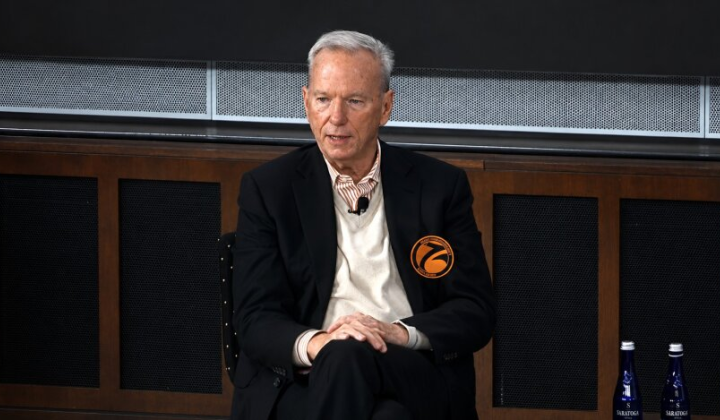
According to ХВИЛЯ: During a public conversation at Princeton with economist Alan Blinder, former Google CEO Eric Schmidt examined the current landscape and trajectory of artificial intelligence. A key highlight was OpenAI's recent breakthrough in proving an 80-year-old theorem, underscoring remarkable advancements in the field. Schmidt noted that a computer authored the paper confirming this proof, marking a new chapter in AI development.
Energy Demands and the Race with China
Reflecting on AI's evolution, Schmidt traced its journey from symbolic reasoning to modern large language models (LLMs). He also drew attention to the enormous energy consumption of data centers, which could reach 100 gigawatts by 2030. According to him, a single gigawatt of data center capacity costs roughly $50 billion, and wait times for new data centers to connect to the power grid are already seven years long.
Schmidt, who led Google for a decade and previously chaired the US National Security Commission on Artificial Intelligence, emphasized the intensity of competition with China. He stated that China is only about six months behind, based on the performance of DeepSeek V4. He predicted that the majority of AI models worldwide will be Chinese, largely because they will be offered for free. The US government has already restricted the sale of advanced chips to China, particularly those involving manufacturing technology from ASML.
Schmidt also highlighted the threat AI poses to office workers, calling it 'the first technology that truly endangers office-based employment.' He pointed out that two-thirds of American jobs rely on physical labor, adding, 'We cannot win this competition globally, and we will not outperform them.'
'A system where all motivation is built around outrage multiplies outrage on all sides.' Eric Schmidt
Addressing social media regulation, Schmidt remarked: 'A person can stand in a yard and shout their opinion all they want. But when they pick up a megaphone and broadcast it to every dormitory at once, they are violating the rights of others.'
Schmidt, co-author of Henry Kissinger's final book and head of rocket company Relativity Space, noted that 'the best way to maximize revenue is to maximize outrage, because outrage drives stronger engagement.'
These statements from Eric Schmidt underscore the critical need to discuss the ethical and social dimensions of AI development, as well as the necessity of regulating fast-evolving technologies. International competition, particularly with China, presents new challenges for the US, demanding a balanced approach to AI advancement and deployment. At the same time, the impact of AI on the labor market and social structures requires careful attention from policymakers and business leaders to ensure citizen safety and well-being.
As the implications of AI on employment become increasingly alarming, it's crucial to understand the broader context of this technological shift. A recent warning from Planet Labs CEO highlights how humanity is ill-prepared for the rapid advancements in AI-driven intelligence. For a deeper exploration of these pressing concerns, read more about the challenges we face in navigating this intelligence explosion here.

Read also