How Flocks of Birds Defy Newtonian Physics, According to Scientists

Decoding Collective Bird Behavior
According to НВ — Техно: A team of international researchers, led by Marina Bukova and Roderich Messner at the Max Planck Institute for the Physics of Complex Systems in Dresden, has discovered a way to apply classical theoretical mechanics to non-reciprocal systems-such as bird flocks. The breakthrough involved introducing artificial variables called virtual partners, a concept proposed by biophysicist Richard Alert. Their findings were published in the journal Nature Physics.
Key Research Insights
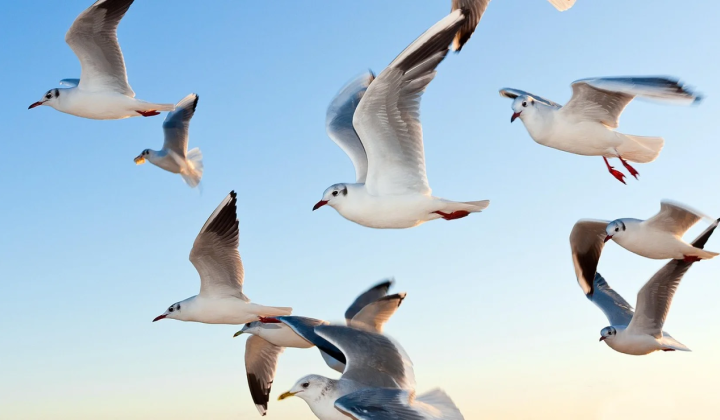
When flying in flocks, birds only pay attention to those ahead or beside them, completely ignoring those behind. This one-sided interaction violates Newton’s third law. Systems with such non-reciprocal behavior are known as non-reciprocal or non-mutual systems. The researchers developed and validated a theory that makes it possible to apply classical mechanical methods to these systems.
Biophysicist Richard Alert suggested creating a virtual partner for each real object, effectively converting one-way interactions into mutual ones. In practice, this involves simulating an imaginary bird in front of each real bird, positioned in the opposite direction. The study’s authors also plan to investigate whether exceptions to Newton's laws lead to new forms of collective behavior in quantum matter.
Published on June 18 at 12:15 AM, this research opens fresh avenues for understanding collective behavior in living organisms and could have significant implications for both physics and biology.
This study marks a crucial step in grasping the dynamics of collective behavior, introducing novel concepts that may reshape how we study natural and artificial systems. - Source: Nature Physics
Applying classical mechanical techniques to non-reciprocal systems could unlock new possibilities for modeling complex social and biological phenomena, such as:
- the behavior of bird flocks
- other groups of organisms
This, in turn, may have a profound impact on various fields of science and technology.
Understanding the intricate dynamics of bird flocks not only sheds light on their behavior but also opens doors to innovative modeling techniques. For instance, researchers have recently developed a method to simulate both bird flocks and human crowds, revealing surprising parallels in collective movement. This approach could further enhance our grasp of collective behavior across various species. To explore this fascinating intersection of physics and biology, read more about the simulation of flocks and crowds.

Read also