NATO General Confirms US Troop Reduction in Europe for the First Time

NATO General's Remarks on Ukraine and the Reduction of US Military Capabilities
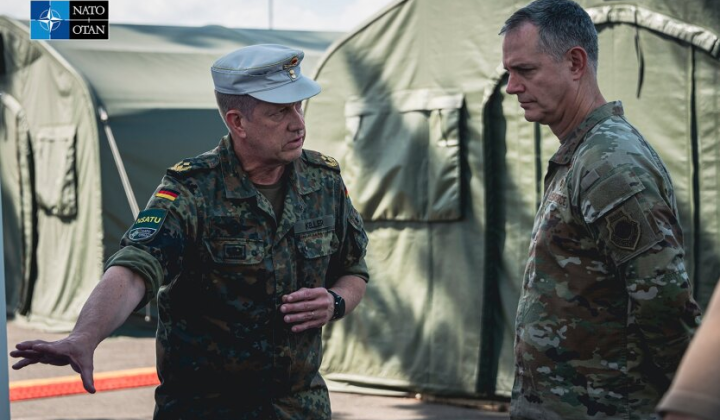
According to ХВИЛЯ: For the first time, a NATO general has publicly acknowledged that the United States is scaling back its military assets assigned to the alliance. General Alexus Grynkiewicz, who leads the US European Command, made the statement during the ILA airshow in Berlin. He noted that Russia shows no intention of clashing with NATO, even as these changes spark anxiety among Baltic nations. Grynkiewicz added that he is developing new strategies to adapt to the reduced resources.
Details of the US Military Capability Cuts
The United States plans to withdraw several key military capabilities from NATO forces, including:
- an American aircraft carrier strike group;
- all cruise missile submarines;
- some Poseidon patrol aircraft;
- tanker planes;
- F-16 and F-15E fighter jets.
These reductions align with Donald Trump's policy of shifting resources toward Asia and the Western Hemisphere. Washington has already announced the withdrawal of 5,000 troops from Germany and the cancellation of a long-range missile battalion deployment in the same country.
'I monitor intelligence very closely. Russia is not seeking a conflict... They understand the term defensive alliance and know we have a number of asymmetric advantages.' - General Alexus Grynkiewicz
Grynkiewicz, who heads US European Command, confirmed these cuts for the first time. At the same time, he emphasized his readiness to act if needed: 'When asked if I am ready to fight tonight-absolutely.'
The general also assessed the situation on the front lines in Ukraine as relatively stable. He stated: 'The Ukrainians are holding up quite well. When the Russians advance, they barely make progress, and it costs Russia incredibly high losses. The front line is relatively stable.' This evaluation reflects the current state of combat and highlights the challenges Russia faces in its conflict with Ukraine.
Grynkiewicz's comments underscore significant shifts in the strategic balance of power in Europe, driven by the reduction of American military assets in the region. These moves could have serious implications for the security of Baltic states and other neighboring countries. Meanwhile, his assessment of the situation in Ukraine suggests that, despite tensions, the front remains stable, potentially indicating a lower risk of near-term conflict escalation.
As the situation in Europe evolves, the implications of the significant reduction of US military presence cannot be overlooked. These changes may reshape NATO's strategic landscape, particularly in light of ongoing tensions with Russia and the complexities of the conflict in Ukraine.

Read also