Investment prospect instead of arsenal: How Rheinmetall sells maritime drones to Europe

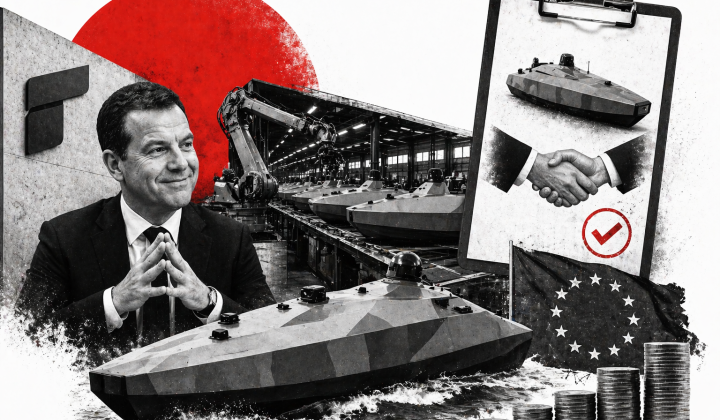
The German defense concern Rheinmetall pompously reported the launch of production of maritime drones Kraken K3 Scout at historic shipyards in Hamburg. The declared potential capacity is up to 1000 units per year. However, in the victorious press release, there is a modest but key caveat: the conveyor will only run at such volumes if there are "orders".
In these three words lies the final diagnosis of the Western military-industrial complex.
1) The monopolist's ultimatum instead of mobilization
Firstly, this is a classic ultimatum of a monopolist. A genuine military-industrial complex of the industrial era launches machines for the strategic task of dominance or survival of the state, working for stock and forming arsenals. Rheinmetall, however, behaves not like an "arsenal of democracy", but as a spoiled contractor. It sets a condition for the government: the conveyor will not start until the budget guarantees the purchase of the entire batch, covers investment risks, and ensures premium margins.
2) The mathematics of the "ceiling": 83 per month as a symptom
Secondly, the mathematics of the process looks frankly absurd. The stated ceiling of 1000 units per year is only 83 units per month. A transnational giant with a billion-dollar capitalization promises to deliver volumes that Ukrainian engineers assemble literally in underground workshops. While China churns out hundreds of heavy 25-ton BMPs monthly, 83 boats a month from the German concern is not industrial power, but elegantly masked production impotence under a loud brand.
3) The price trap: "German drone" as an expensive consumable
Thirdly, the price-setting trap. A German drone will never cost as much as the Ukrainian-made Magura assembled from readily available components. Its final price will inevitably embed the appetites of German trade unions, strict environmental fees, expensive navigation modules, and multi-year service maintenance. Budgets of European funds will be burned tens of millions of euros for a batch of technology that, in a war of attrition, is banal expendable material for one flight.
Conclusion
In summary, Rheinmetall's statement is not a defense strategy for the continent, but an investment prospectus for stockbrokers.
The top management has simply put a trendy, hyped product on display and offered European governments to voluntarily contribute taxes to their cash registers. The Western military-industrial complex has long mutated into an elite corporate boutique. It does not intend to save the continent. It intends to milk it, and does so with impeccable grace.

Read also