UBTECH and FAW-Volkswagen Team Up to Produce Humanoid Robots, Threatening Up to 100,000 Jobs at Auto Plants

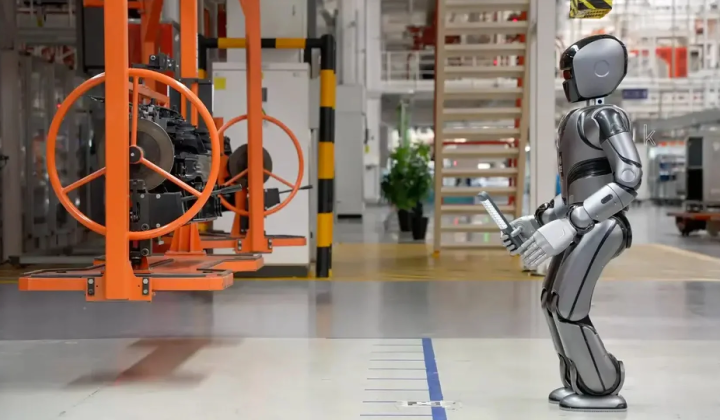
UBTECH and FAW-Volkswagen Join Forces
According to НВ — Техно: Chinese robotics firm UBTECH has partnered with FAW-Volkswagen to develop and deploy humanoid robots designed for logistics and assembly tasks in automotive factories. This collaboration began in July 2024 with the launch of a production line for the Walker S robot at FAW-Volkswagen's Qingdao facility. These robots are programmed to perform various jobs, such as tightening bolts, installing parts, and handling components.
Advanced Robotics and Manufacturing Capacity
UBTECH's industrial humanoid technology integrates an embodied brain, humanoid cerebellum, robotic hardware, and swarm intelligence. On September 12, 2024, UBTECH inaugurated a new 14,000-square-meter factory in Liuzhou, Guangxi province, dedicated to mass-producing the Walker S and Cruzr series. According to Guangxi's regional government, this plant can assemble one robot every 10 minutes.
FAW-Volkswagen operates manufacturing sites across five Chinese cities: Changchun, Chengdu, Foshan, Qingdao, and Tianjin. It produces vehicles under the Volkswagen, Audi, and Jetta brands. However, Volkswagen Group has announced plans to cut up to 100,000 jobs in the coming years. CEO Oliver Blume highlighted that the group's costs are 20% higher compared to other automakers. To address this, Volkswagen intends to reduce its number of models and options by 75%, lower annual vehicle output by one million units, and has already begun cutting 50,000 positions.
This partnership between UBTECH and FAW-Volkswagen marks a significant advancement in integrating cutting-edge robotics into auto manufacturing, potentially boosting operational efficiency. As Volkswagen faces large-scale workforce reductions, adopting robotic automation could help mitigate production costs and adapt to shifting economic pressures. This trend reflects the growing importance of automation across industries amid global economic transformation.
As UBTECH continues to expand its presence in the robotics sector, the recent inauguration of their factory in Liuzhou signifies a pivotal step in mass-producing humanoid robots. This development not only highlights the growing reliance on automation in the automotive industry but also raises questions about job security for workers. For more insights into this significant factory launch and its implications for the future of robotics, check out our article on UBTECH's new manufacturing facility in Liuzhou.

Read also