World’s Highest Gold Concentration Found in Underwater Crater Off Japan’s Coast

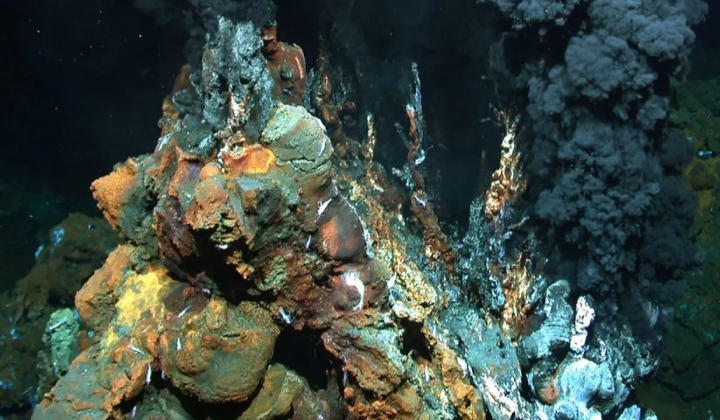
Gold Discovery in Japan’s Volcanic Crater
According to НВ — Техно: Researchers have uncovered black smokers and hydrothermal mounds actively forming gold within a submerged volcanic crater off southeastern Japan. The site, known as the Higashi-Aogashima vents, was first identified in 2015 and lies within Japan’s exclusive economic zone. The concentration of gold in this crater is now recognized as the highest ever recorded globally.
Located roughly 350 kilometers (217 miles) south of Tokyo, these hydrothermal fields were studied by scientists from Shizuoka University, Waseda University, and the University of Tokyo. Using secondary ion mass spectrometry (SIMS), the team analyzed rock samples and found gold embedded within pyrite, a sulfide mineral. Two forms of gold exist in the pyrite: nanoparticles and individual atoms integrated into the mineral’s chemical structure. Both forms are present in the Higashi-Aogashima caldera.
Environmental and Economic Considerations for Mining
No commercial gold mines currently operate on the ocean floor. A past attempt to establish an underwater mine off Papua New Guinea collapsed due to financial troubles and protests from environmental groups, costing the island nation roughly 85 million U.S. dollars in a failed deal. Meanwhile, Mount Erebus in Antarctica releases about 80 grams of microscopic pure gold crystals into the atmosphere daily. Scientists first documented this gold emission over 30 years ago, and it remains the only known volcano in the world to eject crystalline particles of pure gold.
Traces of gold have also been found in emissions from other volcanoes, including:
- Kilauea in Hawaii
- Mount Etna in Italy
- Mount Augustine in Alaska
- El Chichón in Mexico
As the study authors note, 'the pyrite in this particular underwater crater currently boasts the highest concentration of gold in the world.'
This discovery could significantly influence future research and commercial opportunities for extracting gold from marine hydrothermal systems.
The finding of gold in a volcanic crater near Japan highlights the potential of underwater hydrothermal systems for harvesting valuable metals. It could represent a major step forward for the underwater mining industry, which, despite its challenges, holds promise for substantial economic gains. Given the global demand for gold and other metals, such discoveries may drive new investments in exploring and developing seafloor resources. However, environmental concerns tied to deep-sea mining must also be carefully addressed to prevent harm to marine ecosystems.
As researchers continue to explore the depths of our oceans, the discovery of gold-rich underwater environments raises important questions about future mining possibilities. In a related study, advancements in AI technology have led to the identification of 73 new underwater calderas, which could further enhance our understanding of volcanic activity and mineral deposits. These findings could pave the way for new scientific and economic opportunities in marine geology.

Read also