A Nanotech Device Matches NASA’s Accuracy in Predicting Solar Eruptions

A Miniature Breakthrough for Forecasting Solar Flares
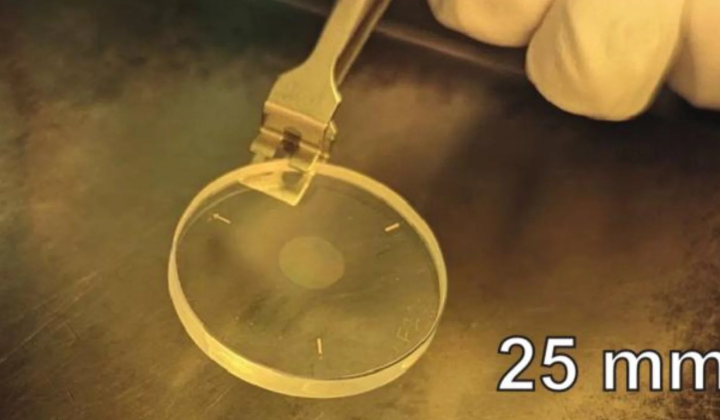
According to НВ — Техно: On June 11 at 7:30 PM, details emerged about a new compact instrument capable of forecasting powerful solar eruptions. Leveraging metasurface nanotechnology, this device rivals the precision of NASA’s satellites while operating at a fraction of the cost. A metasurface is a flat optical component etched with microscopic structures that splits light into multiple polarization paths at once.
The metasurface is just six millimeters thick, and the device contains no moving parts-a design that greatly enhances its reliability. Testing took place at the Dunn Solar Telescope in New Mexico, where light was directed through a mirror atop a tower over 41 meters high, then channeled nearly 70 meters underground. The results were highly promising: maps of magnetic fields in sunspots produced by the device closely matched data from NASA’s Solar Dynamics Observatory.
What This Means for the Future
The research team has already submitted a formal funding request for a space mission. While similar concepts previously remained confined to academic experiments, current space telescopes analyze solar activity at a slow pace. The device’s development details were published in the journal Science Advances, underscoring the scientific community’s strong interest in this innovation. Successful trials and its potential for real-world use open up new avenues for studying solar activity.
This technology could fundamentally change how we predict solar flares-a critical capability for protecting Earth-based systems like power grids and satellites. More accurate forecasts would lower risks linked to solar activity and improve preparedness for its potential impacts. Advances in this field also promise to unlock fresh opportunities for space exploration and solar observation.
As advancements in nanotechnology pave the way for more accurate solar flare predictions, similar innovations in spectroscopy are also making headlines. Recent developments in ultra-fast spectroscopy could significantly enhance missile defense systems and facilitate asteroid research, showcasing the growing intersection of scientific fields aimed at safeguarding our planet.

Read also