Eight Rocket Motor Segments Delivered to NASA for Artemis III Mission

Artemis III Receives Key Propulsion Components
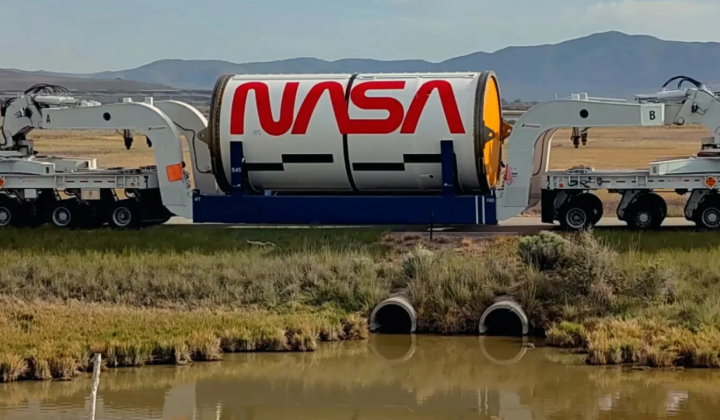
According to НВ — Техно: NASA has taken delivery of eight motor segments for the Artemis III mission, shipped from Northrop Grumman's facility in Promontory, Utah. Assembly of these segments is scheduled to begin this summer, when they will be combined with components received in April at NASA's launch platform. The twin five-segment boosters-which will generate the bulk of the thrust for the Space Launch System (SLS) rocket-are expected to produce nearly 3,266 metric tons of force at liftoff. Each booster is built from three main assemblies, and the hardware was prepared by specialists at the Utah plant. The motors powering this mission have been proven over decades of service in the Space Shuttle program.
The solid-fuel propulsion systems used in Artemis III previously helped lift spacecraft during the Artemis I and II launches. Artemis III aims to send astronauts aboard the Orion capsule into low Earth orbit, but it does not include a lunar landing. Instead, this mission serves as the final rehearsal before Artemis IV and V, which-for the first time since 1972-will return humans to the Moon's surface.
Risks and Challenges Ahead
However, the May explosion of Blue Origin's New Glenn rocket could jeopardize the Artemis III timeline. New Glenn was slated to carry the Mk 1 lander to the Moon later this year. NASA has a contract with Blue Origin to use New Glenn for Artemis missions, highlighting how critical the rocket's reliable performance is to the success of Artemis III.
While the arrival of these motor segments marks a major milestone in launch preparations, the risks tied to the New Glenn incident underscore the need for stability in the supply of key components. The mission's success will depend on completing all preparatory phases on schedule and ensuring the reliability of the technologies involved. Artemis III represents a crucial step toward returning people to the Moon, paving the way for deeper space exploration.
As NASA gears up for the Artemis III mission, the recent explosion of Blue Origin's New Glenn rocket adds a layer of complexity to the timeline. This incident not only raises concerns about the reliability of crucial launch vehicles but also emphasizes the importance of ensuring that all components are delivered and assembled on time for a successful mission.

Read also