Scientists Record the Birth of New Oceanic Crust for the First Time

New Oceanic Crust Formation Observed
According to НВ — Техно: In April 2024, researchers documented the creation of fresh oceanic crust near the Southeast Indian Ridge. Over a 16-day period, the ridge split apart, magma emerged, a series of earthquakes struck, and the seafloor subsided by 4.2 meters. This event, which occurs roughly once every 40 years, was driven by tectonic plate activity in the region.
The observations were made near the Southeast Indian Ridge, located between Australia and Antarctica. In late February 2024, scientists deployed an underwater observatory consisting of five autonomous hydrophones to monitor geological processes. By April 2024, this system had detected significant activity. Over 16 days, the underwater ridge fractured, and in less than two hours, approximately 150 million cubic meters of magma flowed into the cracks.
Why This Research Matters
At the peak of activity, the tectonic plates moved apart at roughly 5 centimeters per minute-about 500,000 times faster than the long-term average. Study lead Jean-Yves Royer noted that the team had only expected to record a slow plate separation of a few centimeters. As a result of these processes, the seafloor along the ridge axis dropped by 4.2 meters, signaling major geological changes in the area.
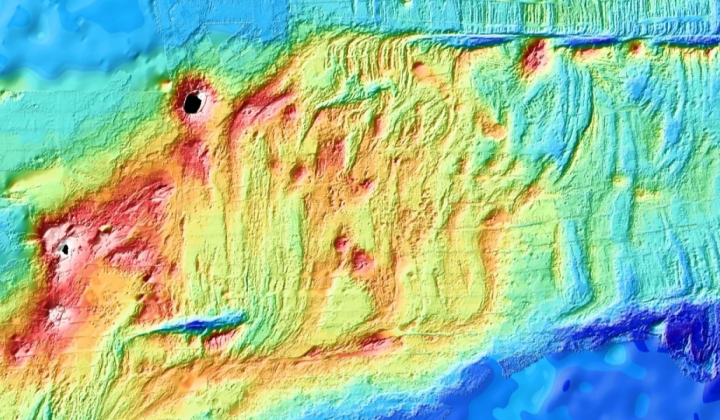
This event holds significance for geology and oceanography, as it sheds light on tectonic plate dynamics and the processes behind oceanic crust formation. The bathymetry of the seafloor around the Southeast Indian Ridge, captured during the study, could serve as a foundation for future scientific efforts in this field.
This was reported by Science Alert.
The research conducted at the Southeast Indian Ridge underscores the importance of monitoring tectonic plate activity to understand our planet's geological processes. The findings may influence future studies in oceanography by providing new data on how oceanic crust forms and evolves. This, in turn, could help predict similar events in the future and enhance our awareness of risks tied to tectonic activity in this part of the world.

Read also