Alexander Syrskyi Details Ukraine’s Major Offensive in Kursk Region: Losses and Strategic Impact

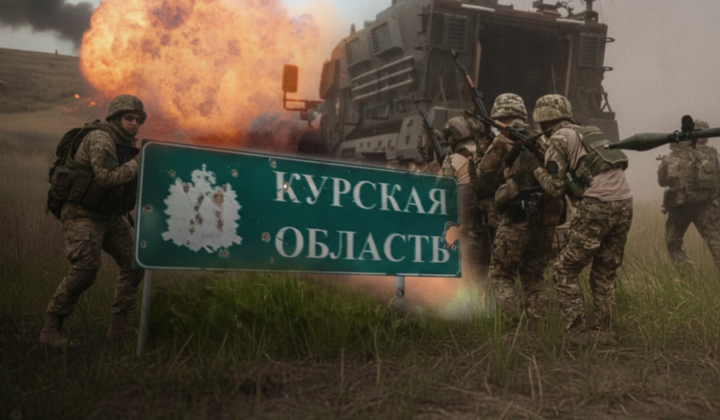
Ukraine’s Defensive Forces Launch Key Offensive in Kursk Region
According to Рубрика — Суспільство: In early summer 2024, Ukraine’s Defense Forces initiated a significant offensive in the Kursk region, marking a crucial phase in their ongoing conflict with Russian troops. Former Commander-in-Chief of the Armed Forces of Ukraine, Alexander Syrskyi, provided insight into the motives behind the operation, its scale, enemy casualties, and the broader strategic consequences. He also explained why additional forces were not redirected to the Pokrovsk direction despite intense fighting there. At a time when Russia was advancing on 13 operational fronts and held a numerical advantage ranging from 4.5 to 6 times over Ukrainian units in some sectors, Ukrainian command chose to focus efforts along the Sumy axis.
Initially, about 26,000 Russian soldiers were deployed in the Sumy region, but following Russia’s unsuccessful assault in Kharkiv, many were withdrawn from Sumy. Syrskyi recalled,
“We engaged in intense defensive battles to disrupt the enemy’s plans, despite their overwhelming superiority.”
The Ukrainian president approved the decision to launch the offensive in Kursk. Within a month, Ukraine’s forces secured control over 1,273 square kilometers of Russian-held territory.
Russia responded by deploying approximately 70,000 troops to Kursk, including paratroopers, marines, and motorized rifle units. The offensive involved three partially staffed airborne assault brigades and two assault battalions, with unit readiness estimated at 60–70%. According to Syrskyi,
“Only one brigade advanced at full strength, while the other two operated at the level of two battalions each, later reinforced by a third battalion after reorganization.”
Strategic Outcomes of the Kursk Operation
On the Pokrovsk front, Russia concentrated nearly 100,000 troops. Syrskyi clarified the rationale behind not reallocating additional forces there:
“Even with reinforcements, the added brigades would have had minimal impact given the massive Russian presence of nearly 100,000 troops on that front.”
In contrast, the Kursk sector’s weaker Russian defenses allowed Ukrainian forces to secure substantial gains.
Throughout the operation, Ukrainian troops achieved a tactical victory by capturing roughly 1,200 square kilometers of territory and taking 594 enemy soldiers prisoner. Following a surprise attack on August 6, 2024, Ukrainian forces gained control of over 100 settlements. Syrskyi emphasized that these successes
“provided a tremendous boost to the morale of our troops.”
Russian reinforcements were hurriedly deployed but suffered heavy losses. Russian reports indicate that on some days, their casualties were five times higher than those of Ukrainian units. Since the beginning of the Kursk offensive a year ago, Russian forces have lost over 77,000 personnel killed or wounded, including 4,000 soldiers from North Korea. Ukrainian forces have added more than 1,000 prisoners to their exchange pool.
This large-scale Ukrainian advance in the Kursk region during 2024 represents a pivotal moment in the war, underscoring the significance of careful strategic planning in military operations.
The offensive highlights a shift in Ukrainian tactics amid significant threats from Russian forces. Ukrainian leadership successfully identified and exploited enemy vulnerabilities, enabling major territorial gains. Beyond the battlefield, the operation delivered important morale benefits, proving that substantial results are achievable even when facing numerically superior opponents.

Read also