A 'Ring of Fire' Solar Eclipse Kicked Off 2024 Over Antarctica

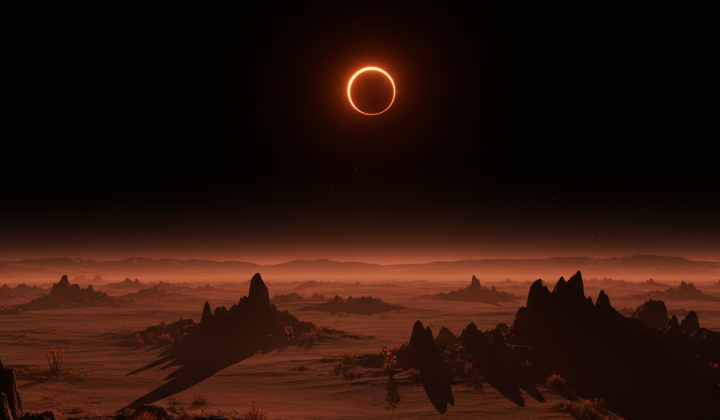
2024's First Solar Eclipse
According to Главком: The first solar eclipse of 2024 was an annular event, creating a dramatic 'ring of fire' in the sky over Antarctica. The full annular effect was only visible from specific parts of the frozen continent. However, a partial eclipse was observable from southern regions of Chile and Argentina, as well as parts of southeastern Africa, including Madagascar, Lesotho, and South Africa. Annular eclipses are less common than partial ones, making this a significant celestial event for the Southern Hemisphere.
Understanding an Annular Eclipse
An annular eclipse occurs when the Moon passes between the Earth and the Sun but is too far from Earth in its orbit to completely cover the solar disk. This leaves a brilliant ring, or annulus, of sunlight visible around the Moon's silhouette. While this phenomenon captivates astronomers and skywatchers, it is crucial to observe it safely. Looking directly at the Sun, even during an eclipse, is dangerous and can cause permanent eye damage. Special eclipse glasses that block ultraviolet radiation and nearly all visible light are required; regular sunglasses or binoculars do not provide sufficient protection.
Previous annular eclipses have drawn crowds in locations like the United States, Japan, Indonesia, and Colombia. Solar eclipses happen when the Sun, Moon, and Earth align perfectly. In 2024, observers in North America were treated to a total solar eclipse. The next total eclipse is anticipated in August 2026 and will be visible from Greenland, Iceland, Spain, Russia, and parts of Portugal. A large portion of Europe, Africa, and North America will witness a partial phase of that event. Notably, the last total lunar eclipse visible from Ukraine occurred in September 2025.
Solar eclipses, particularly annular ones, are major astronomical events. They offer a unique opportunity to witness celestial mechanics in action and help stimulate public interest in space science. With the approach of the next major eclipses in August 2026, excitement is building among both scientists and the general public, highlighting the role these events play in science education. They also serve as a vital reminder of the importance of following strict safety protocols when observing the Sun.

Read also