Belgrade Police Deploy Tear Gas and Stun Grenades Against Protesters

Unrest in Belgrade
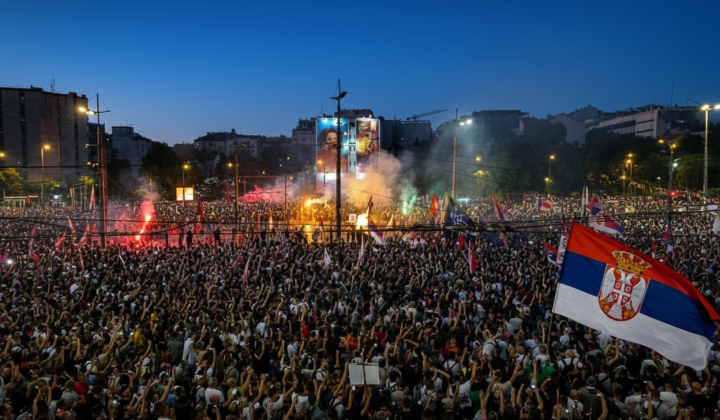
According to Главком: Law enforcement in Serbia’s capital used tear gas and stun grenades to disperse anti-government demonstrators calling for President Aleksandar Vučić’s resignation and early elections. The protests, now exceeding 18 months, were triggered by a tragedy on November 1, 2024, when a concrete canopy collapsed at the Novi Sad railway station, killing 16 people. This incident became a rallying point for widespread public anger.
Thousands gathered at Slavija Square in Belgrade, carrying banners and wearing T-shirts emblazoned with the slogan of the 'Students Win' movement. Protesters threw paving stones, launched flares, and set trash bins on fire. In response, security forces fired tear gas and stun grenades in an attempt to break up the crowd.
Countrywide Situation
During the unrest, President Vučić was on a state visit to China. Parliament Speaker Ana Brnabić, commenting on the rally, cited police estimates putting the turnout at 34,300. She described the action as offering 'nothing new' and insisted that 'democracy is thriving.'
The protests in Serbia have now lasted over a year and a half, with Vučić’s ruling party holding power since 2012. The president has indicated that early elections could take place between September and November. If held, this would mark Serbia’s fourth parliamentary vote in a decade. The country also risks losing up to €1.5 billion in European Union funding, which could further strain the situation.
- Protests have been ongoing for more than 18 months.
- President Vučić has been in power since 2012.
- Early elections may be scheduled between September and November.
“We are preparing for elections. We want as many people as possible to support us-we will not stop.” - Isidora Jovanović
These prolonged demonstrations reflect growing public dissatisfaction with the government, particularly after the railway station disaster that served as a catalyst for mass action. The prospect of early elections and their outcome could significantly reshape Serbia’s political landscape, as well as its relationship with the European Union, which may take steps if protests escalate further and political instability deepens.
The ongoing unrest has prompted significant political shifts, with President Vučić announcing plans for early elections in response to the sustained protests. This decision, amidst growing public dissatisfaction, could reshape Serbia's political landscape. For more details on the implications of these snap elections, visit the latest updates on the situation.

Read also