Fear of AI Drives Putin to Expand His Security Detail

Federal Guard Service Staff Gets a Boost
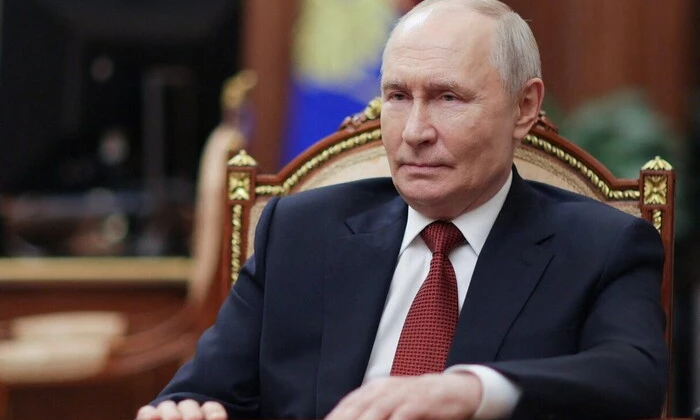
According to Главком: Vladimir Putin has approved an increase in the staffing of the central office of Russia's Federal Guard Service (FSO) to 812 personnel. A draft decree to this effect was published on Russia's official portal for regulatory acts, with the document set to take effect on July 1 of this year. Under the new figures, the maximum number of military and civilian employees in the FSO's central apparatus will rise from 785 to 812.
This decision marks a notable shift, as the FSO's central office staffing had remained unchanged for nearly 13 years before Russia launched its full-scale invasion of Ukraine. The last adjustment to personnel levels occurred in March 2010. However, on December 31, 2022, the central staff grew from 725 to 760 employees. In January 2024, Putin approved an expansion to 775 workers, and as of January 1, 2025, the number was set to reach 785. Once the new decree comes into force, the total will climb to 812.
Security Concerns and Emerging Threats
In addition, Russian security services have temporarily switched off some video surveillance systems used to protect the president and his inner circle. The move stems from fears that artificial intelligence could be used to map the travel routes of top officials. According to the Financial Times, the Kremlin's anxiety spiked after a joint Israeli-U.S. operation against Iran, in which Israeli intelligence analyzed footage from Tehran's traffic cameras to track the movements of Iranian officials.
The FSO plays a critical role in providing personal security for the Russian president, his family, and the prime minister. The latest changes to the agency's structure and operations highlight a growing emphasis on security amid modern challenges.
The expansion of the FSO and the deactivation of surveillance systems point to a tightening of security measures in Russia, particularly against the backdrop of heightened international tensions. This response may be driven by both external threats and internal pressures that challenge the stability of the regime. In light of recent events, the Kremlin appears to be seeking tighter control over the safety of its high-ranking officials and adapting to new realities in an era of technological change. Such steps underscore the importance of national security for Russian authorities in the face of global challenges.
The recent decision to augment the Federal Guard Service's personnel underscores a heightened vigilance in response to evolving security threats. This move aligns with Russia's broader strategy to adapt to modern challenges, including the disabling of surveillance systems due to concerns over artificial intelligence. For more details on how these security measures are being implemented, read about the recent disabling of surveillance cameras in Russia.

Read also