Robots Can Master Complex Tasks Without Diverse Data, New Study Finds

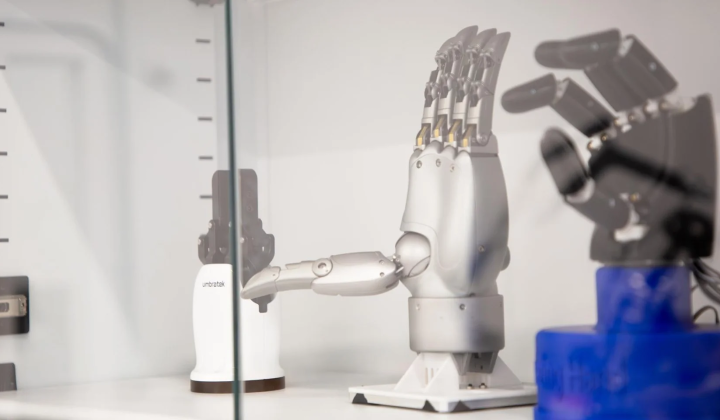
Research from NYU Tandon Challenges Traditional Approaches
According to НВ — Техно: On June 4 at 11:00 PM, researchers from NYU Tandon and the Institute for Robotics and AI published findings that upend conventional thinking about robot training. Their work demonstrates that the sequence in which examples are presented matters more than data variety when teaching robots difficult skills. This insight led to the development of novel motion-planning techniques that generate ordered training examples, which in turn boost learning outcomes.
Overcoming Key Obstacles with Fresh Methods
Many modern robots learn through imitation-by copying human actions. However, popular algorithms like Rapidly Exploring Random Trees (RRT) often produce solutions that differ wildly from one another. This inconsistency makes it hard for robots to figure out which behavior model to follow. As researcher Huaijiang Zhu explained:
“These algorithms are great at finding ways to solve a problem, but when every solution looks completely different, the learning system struggles to determine which behavior pattern to imitate.” - Huaijiang Zhu
The team proposed new motion-planning approaches that include:
- a method focused on steady progress toward the goal;
- a method that uses a library of predefined movements to reduce differences between examples.
They tested these approaches on two challenging tasks. The first involved two robotic manipulators that had to rotate a large cylinder 180 degrees while constantly changing their grip. The second required a robotic hand to roll a cube within its palm to reach a specific orientation.
The results were striking: for the two-manipulator task, the system achieved near-perfect accuracy after training on just 100 demonstrations. The researchers also successfully transferred the learned skills from simulation to real hardware without any additional retraining. The dual-manipulator robot completed 90% of its attempts, while the robotic hand succeeded in roughly 62% of tasks. These outcomes mark a major step forward in robot learning, potentially unlocking new applications for robotics across various industries.
This work carries significant implications for the future of robotics, offering methods that can make training more efficient. By prioritizing example sequence over data diversity, these techniques could reshape how robots learn and adapt to complex challenges. In the years ahead, this may lead to greater robot autonomy and their ability to perform a wide range of functions in manufacturing, healthcare, and other fields that demand high precision and reliability.
While the advancements in robotic training methods are impressive, they are not the only breakthroughs in the field. For instance, researchers have recently showcased how a robotic hand can master piano playing in just a matter of minutes. This highlights the rapid evolution of robotics and the potential for innovative techniques to enhance machine learning capabilities across various tasks.

Read also