Why Russia’s Guided Tour of Mariupol’s Destroyed Theater for Foreign Journalists Is a Propaganda Stunt

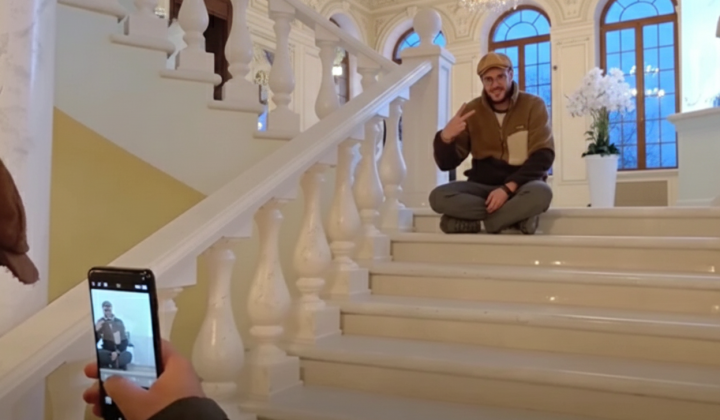
Foreign Journalists Taken to Mariupol on a Managed Visit
According to Главком: On April 24, 2026, the Russian occupation authorities arranged a trip to occupied Mariupol for a group of foreign journalists. The delegation included media representatives from Asia, Africa, and Latin America. Their itinerary featured the Mariupol Drama Theatre, a site infamous for a Russian airstrike on March 16, 2022, when two 500-kilogram bombs were dropped on the building. At least 600 people sheltering inside were killed in the attack.
A haunting reminder of the tragedy-the word "Дети" (Children) painted on the asphalt-once lay in front of the theater. After seizing Mariupol, the occupation forces demolished the theater’s ruins, filled the basement with concrete, and treated it with bleach. By late 2025, they had opened a so-called "restored" theater, which became the centerpiece of the journalists’ tour.
According to the Center for Countering Disinformation, this group of foreign reporters is being molded by the Kremlin into what it portrays as "independent voices abroad." They follow a predictable script: the journalists "enthusiastically describe the theater’s lavish interior, praise the pace of Russia’s ‘reconstruction,’ and claim the city has ‘come back to life.’"
Yet behind this polished facade, the foreign visitors conveniently overlook a critical fact: they are standing at the site of a war crime where a mass killing of civilians took place.
Ukrainian Military Leadership Responds
Andriy Biletsky, commander of the Third Army Corps, has stated that Ukraine will reclaim Mariupol, estimating a 90% probability of a military return. He emphasized that success depends on seizing "a favorable historical moment." These remarks underscore the protracted and complex nature of the conflict, as well as the occupation authorities’ efforts to project a positive image of their actions to the international community.
The orchestrated visit of foreign journalists to occupied Mariupol and Russia’s attempt to fabricate a narrative of successful reconstruction highlight the stark contrast between reality and propaganda. The occupying forces aim to suppress the memory of the city’s tragic events and convince the world of their legitimacy. Meanwhile, Ukrainian military leaders’ statements about a potential military recovery of Mariupol demonstrate that control over the city remains a pressing issue in the ongoing conflict.
These developments underscore the need for the international community to closely monitor the situation in Ukraine and the harsh realities faced by its local population.

Read also